Peaches and Cream

Peaches answers cream.

Two daughters present and counted.

The walk can begin.

“Who wants to be Peaches?  Who wants to be Cream?” For years, that was how our family adventures began. Whether we were going for a run in the baby jogger, heading on a hike, walking to the park, or getting into the car; I always would ask the question. Caroline would quickly claim one. Lucy would take the other. Sometimes they switched. Sometimes they argued. But eventually the answer always came. “I’m Peaches. I’m Cream.”

Everyone was present. Everyone was accounted for. We were ready to go.

For years, I simply thought it was a fun family ritual. Only later did I realize that something deeper was hiding within the peaches and cream. It was our family census. Not because I needed the number, but to make sure nobody was left behind.

Every parent understands this. You count the children before a hike. You count them before getting on a bus. You count them before leaving the restaurant. The counting is not about arithmetic, it’s about responsibility.

Years ago, British Prime Minister David Cameron discovered that lesson for himself. After a family lunch, he and his wife drove home separately and realized that their eight-year-old daughter was in neither car. They had left her behind at the pub. They returned quickly and found her safe.

Every parent knows the wave of panic that must have washed over them in that moment. The problem was not transportation, it was assumption. Nobody counted.

Perhaps that has contributed to why I have always been curious about the Torah’s obsession with counting.

* * *

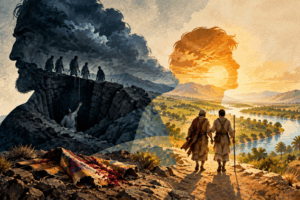
We recently read the Torah portion Bamidbar, which opens with a census. Moses and Aaron are instructed to count the Children of Israel tribe by tribe. At first glance the census feels administrative. Tribal totals, military readiness, ancient record keeping. But the Torah rarely spends this much ink on something that is merely administrative. If God simply wanted a number, He did not need Moses. God already knew the number. The census must be about something else.

I believe the clue to the census’s true purpose is hidden in the fact that Bamidbar is not the Torah’s first count. Long before Moses counted Israelites in the wilderness, Noah was counting animals on the ark. The Torah could have instructed Noah to bring one lion, one elephant, one giraffe, one dove. Instead, the animals enter the ark shnayim shnayim, two by two. The first admission ticket in the Torah is not a coin, it is a relationship. Noah did not preserve species through inventory. He preserved creation through partnership; no animal entered the ark alone. The future of the world depended not merely upon survival, but upon belonging.

Noah and Moses both delivered a newly formed community across a body of water to a new beginning. The first census in the Torah is not a count of animals. It is a count of relationships.

The same pattern returns centuries later, in Exodus. God commands Moses to count the Israelites through a half shekel offering. Every person contributes the same coin. Rich and poor. Leader and laborer. Yet each person gives a half shekel rather than a whole one. Why half? The lesson was embedded in the coin itself. None of us can be complete alone.

You count because you belong. You only become whole when you find your other half.

* * *

My counting has changed. Once I counted daughters before hiking. Then, one winter night a few years ago, I took my first new census.

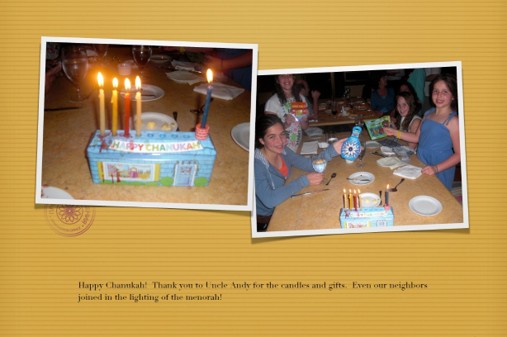
On the first Hanukkah that Joan and I shared together, I told her that the menorah on our table had once belonged to Marilyn Monroe.  Monroe had converted to Judaism before her marriage to Arthur Miller in 1956. Joan stopped, looked at me and then back to the menorah. She was surprised and filled with wonder because of her lifelong admiration for Marilyn Monroe. She lit the candles with a double portion of joy.

Each Hanukkah since, when the candles burn, Joan glances at the menorah with the same joyous smile she had on that first night. The most photographed American woman of the twentieth century once lit Hanukkah candles in her own home. Her menorah now lives in ours. It was, in a way, our first half shekel; the small coin that turned a house into a household. Two halves becoming one whole.

* * *

This is what the Torah has been quietly teaching us, from the ark to the half shekel, and from Marilyn’s menorah to the trailhead at the start of a family hike. The Torah does not merely count individuals. It counts them into belonging. The count does not only recognize the bond. The count brings the bond into being.

We count the Omer. We count toward a minyan. We count generations. We count through the half shekel. We count tribes in the wilderness. No matter what we count, the purpose is never arithmetic. The purpose is belonging, and the counting itself is what brings the belonging into being.

* * *

Today is Father’s Day. Tomorrow, Caroline turns thirty. I approach sixty. My father, the girls’ beloved Gramps, turned ninety-one. Three generations stand together at nearly the same moment in time. Thirty. Sixty. Ninety. A small census of our own, not of population but of blessing.

I am closer now to becoming a grandfather, b’H, than to running another baby jogger race. Those days have passed. New ones are approaching.

I do not yet know how I will count my grandchildren. I do not yet know what call and response will follow peaches and cream. Maybe milk and honey, the promise of the Promised Land. Maybe light and light, one candle, then another, then another. Maybe something my grandchildren invent before I have the chance to name it. If two by two was Caroline and Lucy, then I pray that the next ark may carry more.

I pray for many. I pray for a tribe, full of faith, and of belonging. Because the Torah counts us for the same reason that parents count their children before a hike. Not because we need the number, but because we do not want to leave anyone behind.

* * *

The census was never counting Israelites.

The census was creating Israelites.

The count created belonging.

* * *

Two halves at the door.

Peaches answers cream. We count.

No one left behind.

* * *

Then and Now

The Peaches and Cream Tradition Continues

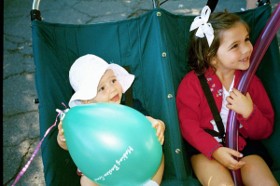
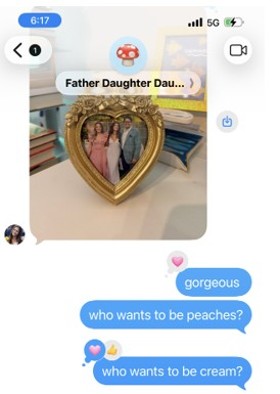
The Peaches and Cream call and response began when Caroline and Lucy were small. It continues to this day. Twenty five years on, the same two daughters still answer the same two questions.

* * *

Then. Caroline and Lucy. The baby jogger days.

Now. The same question, twenty five years later.

* * *

If you would like to read more about Marilyn Monroe’s menorah and its journey into our home, I shared that story previously here: The Magical, Meaningful, and Memorable Story of Marilyn Monroe’s Menorah.


Wrapped Blessings

This morning, at a minyan in Bal Harbour, two things arrived together.

The first: a rabbi visiting from Jerusalem lead us. He taught about manna, the bread that fell from heaven when the children of Israel walked into the wilderness with nothing in their hands. A blessing you could gather in the cool of the morning.

The second: as the service opened, a soldier rose to speak. He was a young man who had lost both of his legs to a land mine.

I have been turning those two things over against each other all day.

*   *   *

I have long believed that the difference between a curse and a blessing is not in the thing itself, but in the outlook.

A curse is what you call a circumstance when you stand inside it and judge it as it is, right now. A blessing is what you call the same circumstance once time has done its slow work. Once the passage of days has brought healing, feeling, and the kind of seeing that only arrives later.

In the moment, things can feel bad, but remember that you are looking outward. Your outlook sets your attitude. This too shall pass and as it passes, something opens. You begin to see inside; insight, after all, is only the sights that live inside ourselves and others.

For a long time, that was the whole of what I believed. The curse comes first; the blessing comes later; wait and the wheel will turn.

This concept is not my own creation. That a curse can ripen into a blessing is among the oldest consolations we have: gam zu l’tovah, “this too is for the good,” said the rabbis; the sages, the poets, and the modern psychologists each in their own way. I am not trying to add a small stone to a cairn that is already a mountain of wisdom.

What I am after is narrower and possibly stranger. Not the comfort that the blessing will arrive once time has done its work, but the possibility that the blessing was there all along, hidden inside the curse. The same substance only wrapped.

This morning, the rabbi from Jerusalem showed me exactly where to look.

*   *   *

The bread from heaven is man. מן. Mem. Nun. Then the rabbi turned the word over. The man who rose, generations later, to erase us, the villain of the Megillah and tyrant of Purim, is Haman. המן.

The same two letters sit at the heart of each. Mem. Nun. The blessing and the curse nearly mirror one another: manna hidden inside Haman, wrapped in an additional letter.

The name of the curse already carries the name of the blessing inside it.

This is the deep grammar of Purim itself. The Book of Esther tells of a day Haman had chosen for the destruction of the Jews; on that very day, everything was inverted. The Hebrew phrase for it is v’nahafoch hu, וְנַהֲפוֹךְ הוּא, which means “and it was overturned.” It is the heartbeat of the whole holiday: the reversal in which a thing becomes its own opposite.

You can read it unfold, line by line, as the Megillah unrolls. The gallows Haman built for Mordechai became the gallows for Haman himself. The honors Haman was sure were coming to him, he was forced to drape on the man he hated. The decree of death became a day of deliverance as sorrow turned to gladness.

The curse did not get traded for a blessing after the fact. The curse was the blessing, turned inside out.

Purim keeps a second secret, folded into the same scroll. It is also the holiday of hiddenness. In the entire Book of Esther, the name of God is never once spoken. It is only book in all of scripture where he goes unnamed and yet his hand turns every page. The name Esther itself comes from the Hebrew root for hidden, and the sages hear beneath it the verse haster astir panai, הַסְתֵּר אַסְתִּיר פָּנַי, “I will surely hide my face.”

This is the deepest wrapping of all. Not that the blessing is absent, but that it is concealed. It is the same hide and seek we play with our own lives. Esther hid her name for nine years, and Moses was raised a prince before he learned whose child he was. Each of them became themselves only by stepping beyond the prisons their palaces had become.

When Haman, the curse, carries manna, the blessing, inside it, one letter apart, it is doing exactly what the whole Megillah does. It hides the gift in plain sight.

The blessing is not always something that arrives later. Sometimes it was inside the whole time. Wrapped.

*   *   *

We wrap presents for a reason. A gift handed over bare is barely noticed. The paper, the ribbon, the box, the pause before the lid comes off: that is what teaches us to want what waits inside. A blessing that costs nothing to receive is a blessing we forget by morning. Hashem wraps the blessing in the box of a curse. The wrapping is not a cruelty. It is the very thing that makes us reach.

I learned this once, years ago, in a different sanctuary.

At The Shul in Surfside, I heard a teaching about a son sent into town to receive a blessing from the Rabbi. The Rabbi gave him these:

May you plant, but never harvest.

May your house be destroyed, and may you forever be a guest.

May your table always be dirty and messy.

The son came home furious. These are curses, he told his father. What kind of Rabbi did you send me to?

His father unwrapped each one.

Plant but never harvest: may your children outlive you and never be cut down before their time.

May your house be destroyed and you be forever a guest: may your spirit, after you are gone, live on as a welcome presence in the hearts of those who loved you.


May your table be dirty and messy: may children and grandchildren and great grandchildren crowd around it for generations, in all their loud and compassionate chaos.

Why, the son asked, did he deliver blessings dressed as curses? Why not say it plainly?

Because life is rarely what it appears on the surface. What we first see is almost never what we finally understand. The Rabbi wanted the boy to learn to dig past the wrapping to the nechama, the soul, that lives inside each circumstance and each person.

(The Rabbi gave five blessings in all; the complete teaching is at the end of this blog.)

*   *   *

President Ronald Reagan loved the story of two twin boys — one a pessimist, one an optimist. The pessimist wept in a room full of new toys, certain they would only break. The optimist laughed in a room full of manure because, with all that manure, there simply had to be a pony somewhere.

Two rooms. Two boys who decided, before they ever looked, what they would find inside.

*   *   *

This morning When the soldier rose to speak, the box stopped being a metaphor as he told us about the moment he came back to consciousness and realized that both of his legs were gone. The first clear thought that surfaced up through the pain, before the grief, before the arithmetic of everything that was now gone, was not why me. It was not what now. He understood, immediately, that he had been given a new mission. Hashem took away my legs, he said, in order to give me wings.

I have nothing to add to that. I only know I will spend a long time trying to deserve having been in the room to hear it.

*   *   *

There was more to the service and some of it was mine.

When the Torah was taken out, I was given the honor of the first aliyah, the one set aside for a Kohen. I carried something private up to the bimah with me. It had been a heavy week. An Achilles tendon that tore and tore again and is still relearning how to hold my weight. A hard appointment with the doctor yesterday, my healing slower than I had hoped. I stood for the blessing quietly wondering when I would walk normally again, when I would step back onto a tennis court.

Eight months earlier, the morning after the surgery meant to repair that tendon, I awoke to a voicemail. I had just cancelled a trip to Bahrain to see my friend Khalid, and he had called to console me. In Islam, he said, we say khayra. When something bad happens to you, it is because God wants to draw you closer to Him, and to bring good things to you. So I suppose that is what has happened. Lying there, sore and sorry for myself, I thanked him; I did not actually believe, or understand, what he meant.

Then came the second aliyah.

It went to the soldier who had spoken, and beside him, a second soldier, who had also lost both of his legs. The two of them were called to stand beside me in front of the Torah for their aliyah.  When they completed their Torah reading, our minyan stood, and together with both soldiers, we all danced. The soldier who had lost his legs about eight months earlier, the very same month my own tendon tore for the second time, danced with us. As he danced, he announced to the room, with confidence and determination, that his dancing was only going to get better.

I had walked in that morning grieving a ruptured tendon. He had no legs, and he was promising us he would dance better next time.

The ache in my heel did not disappear. The road back is still long and I still want my tennis court. But standing there, my worry was returned to its true size, small enough, at last, to carry. Beside his, my own curse looked almost like a gift.

Khayra, Khalid had called it, months before I was able to feel what he meant.

I came into the minyan believing that time turns a curse into a blessing. I left wondering whether I had it wrong. Perhaps the blessing is there from the very beginning, hidden inside the one thing we are trying hardest to escape.

Man and Haman. The manure and the pony. The legs and the wings. The wrapping is not the obstacle to the gift. The wrapping may be the gift itself. Even a torn tendon. Even the long walk back to the court. Wrapped with faith.

*   *   *


Heaven’s bread still falls.

One letter hides the blessing:

unwrap, and find wings.

*   *   *

Torah References

Noah and the Flood (Genesis 6): It looked like the end of the world. God set out to wash away a corrupted earth; yet, folded inside that destruction, was an ark, and Noah’s faith, and a family and the animals carried safely on the water. What appeared to be the curse of annihilation was the blessing of a world purified and reborn in goodness.

Joseph’s Coat and Dreams (Genesis 37, 44, 45, 50): The coat of many colors began as a father’s favor, a garment of beauty. Then his brothers’ jealousy turned it into bloodstained evidence of a death that never happened. His dreams, in which his family bowed before him, read to those same brothers as arrogance, and they sold him into slavery and let him rot in prison. Every gift arrived looking like a curse. But the slavery carried him into Egypt; the prison carried him to Pharaoh’s trust; and the dreams came true in the only way that mattered. When the famine came, the brother they had tried to bury was the one with the power, and the grain, to keep them all alive. The curse of his rise was, in truth, their rescue.

The Rabbi’s Five Blessings (Full Text)

The complete teaching from The Shul in Surfside. The Rabbi’s blessings, as the son first heard them:

May you plant, but never harvest.

May you bring others into your home, and may they never leave.

May you send your own out from your home, and may they never return.

May your house be destroyed, and may you forever be a guest.

May your table always be dirty and messy.

And as his father unwrapped them:

Plant but never harvest: may your children outlive you, and never be cut down before their time.

Bring them in and may they never leave: may your children marry, and may you welcome those families and hold them close.

Send them out and may they never return: may your children build homes of their own, happy enough that they never come back alone and unmoored.

May your house be destroyed and you be forever a guest: may your spirit, after you are gone, live on as a welcome presence in the hearts of those who loved you.

May your table be dirty and messy: may children and grandchildren and great grandchildren crowd around it for generations, in all their loud and compassionate chaos.

The Same Secret, Across Traditions

This consolation is not ours alone. It surfaces wherever people have suffered and then reflected.

Hinduism

Swami Vivekananda, “An Answered Prayer”

He asked for strength, and was given difficulties to make him strong.

He asked for wisdom, and was given problems to solve.

He asked for courage, and was given dangers to overcome.

He asked for love, and was given people to help.

He received nothing he had asked for, and everything he needed.

The monk who carried the practice of yoga to America left this prayer, which holds the whole idea in miniature.

Zen Buddhism

Mizuta Masahide (1657 to 1723)

蔵焼けて 障るものなき 月見哉

kura yakete / sawaru mono naki / tsukimi kana

Barn’s burnt down; now I can see the moon.

The poet and samurai watched his storehouse burn to the ground; the loss removed the very thing that had blocked the view.

Islam

Khayra

The good that hardship is sent to carry. The Prophet taught that the believer’s every circumstance is good, gratitude in ease and patience in pain, and that when God wills good for someone, He sends them trials. You have already met this teaching in the body of this piece, in Khalid’s voicemail from Bahrain.

For Further Reading

Esther, Moses, and Finding Your True Self in the Palace: Esther hid her Jewish identity in the palace for nine years; Moses was raised an Egyptian prince before he knew whose child he was. Each became who they truly were only when they stopped hiding and answered the call, Moses with a single Hebrew word, Hineni, “Here I am.” The companion to this piece: the blessing, and the self, both wait wrapped and hidden until we find the courage to uncover them.

Gam Zeh Ya’avor: “This Too Shall Pass”: King Solomon sends his most trusted minister to find a ring that can make a happy man sad and a sad man happy. What comes back is a plain gold band engraved with three Hebrew letters, gimel, zayin, yud, which spell gam zeh ya’avor, “this too shall pass.” A meditation on how the passage of time levels both our sorrows and our joys, and how to enter even a hard year.

What Is a Crisis?: A crisis, this piece argues, is a state of mind, not a state of being. Drawing on Jonah and the sailors caught in the storm at sea, it is a reflection on slowing down, breathing, and staying calm in the face of an uncertain future, so that the worry of what might happen does not consume the present moment.

Learning How to Ask

Learning How to Ask

“You ask too many questions.”

I’ve heard that more than once in my life.

The first time was in school. My 5th grade English teacher, ironically named Mr. Ask, told me I asked too many questions.

Years later, I heard it again at our first pediatrician visit after our daughter Caroline was born. We were new parents. Everything felt important and uncertain, so we asked questions. A lot of them.

Each time, the doctor responded the same way:

“I refer you to the manual you received at the hospital.”

The manual, seven days old.

As if everything we needed to know was already written somewhere. As if the answers existed and our job was simply to find them.

Eventually, we left that practice.

When we requested our medical records, there was a note in the file:

“Parents ask too many questions.”

It felt like something out of Seinfeld, except the note was real.

For a long time, I carried that with me, quietly absorbing the idea that some people did not welcome questions.

Then, during this recent Passover, I found myself reflecting on something very different.

At the Seder, the youngest child asks the questions.

Not only is it accepted; it’s celebrated.

Then I thought more deeply about that tension, between curiosity and cynicism, and turned to the Four Sons: the wise, the wicked, the simple, and the one who does not know how to ask.

I realized I had been looking at them the wrong way.

I always wanted to be the wise son. The one who understands. The one who knows.

And if I’m honest, there were moments I drifted toward the wicked son too. Not because I believed what he believed, but because there’s something in all of us that wants to push, to challenge, to be seen.

But I never saw myself as the simple son.

When I moved to Miami two years ago, something shifted.

I started to notice not what I knew, but everything beyond it.

After sitting with that, I stopped aspiring to be the wise son and began to explore the simple one.

Not because he knows less, but because he leaves room for more.

This year, something shifted again.

In my work with AI, studying agentic systems through a course at the Harvard Data Science Institute, I began to see the same idea through a new lens.

The ancient conversation at the Seder table and the modern one in the classroom began to overlap.

Knowledge is no longer aspirational; it’s foundational.

In AI, the difference is no longer what the system knows, but how it is asked.

I noticed it more deeply when I began working with AI in a more intentional way.

Not just asking it questions, but building something with it.

I launched a small pilot, an agentic system to generate daily reflections for the Counting of the Omer.

I called it the MatzoAgent.

In my mind, I framed it through the Afikoman.

The middle piece of matzo we break, hide, and ask the children to find.

An ordinary piece of matzo, broken in half, becomes something more.

The youngest children, who ask the four questions, then search for the Afikoman.

And only when it is found can the Seder be completed.

That was the premise: that something hidden, in the archive, in the tradition, in ourselves, might be surfaced through the right question, asked daily, gently, over forty-nine days.

At first, I thought the power would come from the answers.

But that wasn’t what mattered.

What mattered was everything around the question: how it was framed, how it was guided, and how it was reviewed.

The system worked not because it was intelligent, but because it was directed.

Eighteen days in, a reader wrote to me.

She said she had spent the afternoon wandering through the site, unbeknownst to me, revisiting pieces she had read before and discovering others she had never seen.

She wasn’t writing about the daily reflection.

She was writing about everything the reflection had led her back to.

The system had not given her an answer; it had given her a doorway.

The question, once planted, kept working in her without me.

I began to realize something subtle.

AI wasn’t an authority. It was more like an ingredient.

Something to be used judiciously.

The value wasn’t in what it produced on its own, but in how I chose to bring it into the process.

The reader later put it back to me more clearly than I had put it to myself:

Even with AI, the work is the life. The AI is just how the question gets asked.

The difference between something generic and something meaningful often came down to a single thing:

The question.

The Afikoman: broken, hidden, waiting to be found.

I always enjoyed hiking with my daughters Caroline and Lucy. When they were younger, we told stories and riddles to pass the time.

One of our favorite riddles was the two men at a fork.

One always tells the truth. One always lies. You don’t know which is which.

Somewhere down one path, there is a treasure.

You can then ask one question.

After much discussion, and hiking, Caroline and Lucy discovered it:

“Which direction would the other man say leads to the treasure?”

And then you go the opposite way.

The path to the treasure is there.

But it only reveals itself through the question.

At the Seder, there is a son who does not know how to ask.

That’s how I always heard it.

But this year, I heard something else.

What if he does not know how to ask…yet?

Not because he can’t, but because he is considering which question is worth asking.

In the age of AI, questions come easily.

The harder part is knowing which ones are worth asking.

There’s a moment in Monty Python and the Holy Grail that I keep coming back to.

To cross the Bridge of Death, travelers must answer “questions three” correctly or be cast into the abyss.

The first travelers answer quickly.

They don’t pause. They don’t question the question, and they fall.

Then the final traveler, King Arthur, arrives and the question changes:

“What is the airspeed velocity of an unladen swallow?”

It sounds precise. Intelligent. Impossible.

A trick question.

Instead of answering, King Arthur does something else.

He asks back:

“What do you mean, an African or European swallow?”

In that moment, everything shifts.

The Bridgekeeper is no longer the one asking.

He becomes the one being questioned.

He doesn’t know the answer, and he is cast into the abyss.

King Arthur’s instinct wasn’t to answer quickly, but to ask carefully.

And it saved his life.

Not by the answer he gave, but by the question he asked.

At the most basic level, AI rewards speed.

But at a deeper level, the level of agentic systems, the advantage belongs to something else entirely.

Not the fastest answer.

Not even the most knowledgeable one.

But the person who pauses long enough to examine the question, to refine it, to challenge it, and to understand what is really being asked, and what is not.

There is a moment with King Solomon that has always stayed with me.

Two women come before him, each claiming to be the mother of the same child.

There are no witnesses, no clear evidence, and no way to determine the truth through facts alone.

So King Solomon does something unexpected.

He calls for a sword and says that the child will be cut in half.

One of the women agrees, but the other cannot.

She steps forward and pleads, “Please, give the child to her. Just don’t harm him.”

The real mother doesn’t argue. She lets go.

The first traveler answered.

King Arthur asked.

King Solomon designed the question.

Each is a step deeper into the same practice.

King Solomon did not merely ask a question.

He designed the one that revealed the truth.

Maybe the wise son is no longer the aspiration, but the foundation.

Maybe the simple son reminds us to stay open.

Maybe the one who does not know how to ask is the one we’ve misunderstood all along.

Not because he doesn’t know…

but because he understands what it means to ask carefully.

We are surrounded by answers now.

But answers don’t change us.

Questions do.

The treasure is still there.

But it reveals itself not to the one who knows the most…

but to the one who knows how to ask.

If you could ask one question, what would it be?

Everything is known
But nothing opens without
The question we choose

Editorial note: The reader referenced in this essay reviewed the relevant passage and provided permission for publication.

Further Reading

For those who want to explore these ideas more deeply, I’ve included a few pieces that shaped this reflection:

  • The story of Isidor Isaac Rabi, who credited his mother’s daily question for shaping his scientific mind. While other parents asked, “Did you learn anything today?”, his mother asked, “Izzy, did you ask a good question today?” Rabi, who went on to win the Nobel Prize in Physics in 1944, later said this focus on questioning, rather than simply learning, helped make him a scientist. A powerful parallel to this essay’s central idea: progress begins not with answers, but with the discipline to ask well.
  • A related essay I wrote on the simple son: Inspirations of Ignorance: Lessons from the Simple Son This essay also includes a photograph of the Four Sons from the Szyk Haggadah, a book my family has had since 1920. The illustration is by Arthur Szyk, whose work brings the Four Sons to life with remarkable depth and detail.
  • The biblical account of King Solomon and the two women can be found in First Book of Kings 3:16–28.


The NFL as an Agentic Operating System

Super Bowl XLIX. February 2015. The New England Patriots versus the Seattle Seahawks. Seconds remaining. Seattle is on the one-yard line, widely expected to win. Instead of running the ball, they throw a quick slant—and Malcolm Butler intercepts it, sealing the game.

At first glance, it looks like a shocking mistake or a miraculous defensive play. It was neither. It was the visible outcome of a system.

The Patriots had studied this exact formation and scenario through film, statistics, and repetition. Down, distance, formation, and clock all pointed to a high-probability slant route. In real time, the coaching staff ensured the right personnel was on the field. Butler, who had practiced this exact play repeatedly, recognized the pattern instantly and executed without hesitation.

What appeared to be improvisation was actually coordinated execution.

This is how I think about agentic AI.

An NFL team is a real-time, multi-agent system composed of interconnected layers. The data layer includes opponent film, player statistics, injuries, weather, and live game context—score, time, field position, and formation. It creates a continuously updated representation of reality.

The learning layer emerges through film study, analytics, repetition, and adjustment. Teams identify patterns and tendencies, effectively building predictive models of opponent behavior. This learning occurs both before the game and during it through feedback loops.

The player layer contains multiple agent roles—not all agents are the same. Most operate as bounded executors: linemen block, receivers run routes, defensive backs cover assignments. Some interpret signals and adapt in real time. A few coordinate others. This is a heterogeneous system defined by role clarity under constraint.

The orchestrator on offense is the quarterback. He functions as the control plane: processing real-time inputs, reading the defense, calling audibles, and coordinating specialized actors under extreme time pressure. But his most important contribution is not always initiating action—it is knowing when to stop it. A quarterback who throws the ball out of bounds to avoid a sack, fumble, injury, or interception is preserving system integrity by refusing a catastrophic path. Orchestration is not just sequencing—it is governing execution, managing risk, and terminating actions when conditions degrade.

This architecture enables coordination, but it also creates concentration risk. Because coordination is centralized, a failure at the orchestrator layer can invalidate otherwise correct downstream execution. A misread, delay, or miscommunication can collapse the entire play—even if every other agent performs correctly.

The head coach operates as human-over-the-loop. He defines strategy, sets constraints, establishes risk tolerance, and intervenes only when judgment, accountability, or exception handling is required. He is not executing the play—he is governing the system.

The Guardian layer operates orthogonally to the workflow. Referees, replay review, and the NFL rulebook monitor actions, enforce constraints, validate outcomes, and stop violations. This layer does not participate in execution—it ensures integrity across it.

Football also illustrates how decisions span time horizons. Some are pre-designed through game planning. Some are real-time through quarterback reads. Some are escalated to coaching judgment. Injuries, substitutions, clock pressure, and unexpected formations require continuous adaptation. The critical question is not whether everything is scripted, but whether decision rights are clear and execution pathways are well governed.

This brings us back to Butler.

In that moment, the system worked exactly as designed. The data and learned patterns identified the likely play. The coach had established the strategic conditions and personnel choices that made the response possible. Butler, as a trained agent, recognized the signal and executed within his role. The outcome was not luck—it was alignment.

What football makes clear is that intelligence does not reside in any single actor. It emerges from coordinated interaction.

Agentic systems work the same way.

They succeed not because they are smarter in isolation, but because they are better orchestrated—especially when they know when not to act.

Reader note: This companion reflection applies the ideas explored in “Learning How to Ask” through the lens of agentic AI and the NFL. It is designed as an operational case study rather than a standalone Breaking Matzo philosophical essay.

For readers seeking a more traditional Breaking Matzo spiritual framework connecting the New England Patriots, football, and Torah, please also see “Tom Brady’s Touchdown Tosses Teach Torah,” which explores the Patriots dynasty through the lens of Jewish spiritual growth.

Shabbat Passover Reflection: After we left Egypt, did Egypt leave Us?

Leaving was easy
The desert walks within us
Still learning to stop

The Exodus took the Jews out of Egypt.
Shabbat asks whether Egypt is out of us.

On Shabbat during Passover, we are invited to reflect on what happens after freedom.

The Children of Israel experience liberation for the first time, yet almost immediately they long for the leeks and garlic of Egypt. Not slavery itself, but the familiarity of it.

That longing wasn’t really about food; it was about fear. Freedom, it turns out, is harder than escape.

In the wilderness, something new emerges. Alongside manna—the daily sustenance from heaven—comes the first experience of Shabbat as a lived reality. A double portion falls before the seventh day. There is enough. No gathering required.

For the first time, people are asked to stop. To trust. To live one day without striving.

Every week, Shabbat sets that same test before us. It does not ask whether we remember Egypt. It asks whether we have actually left.

The double portion of manna—echoed in the two challahs on every Shabbat table—offers a quiet but radical idea: you do not need to overwork to survive. There will be enough. You can stop. The world will not fall apart.

But stopping is difficult.

Most of us carry our own version of Egypt: the anxiety that hums when we are not producing, the phone we reach for out of habit, the thoughts that continue even when our hands are still. We have been freed from many external constraints, yet the internal Pharaoh still cracks the whip.

Passover breaks open the question once a year. Shabbat brings it back every week, candle by candle, cup by cup.

Not as a command.
As an invitation.

The question is not whether we are free.
It is whether we are living like we are.

Dinner Discussion Questions

  • What is one thing in your life that you have “left”… but are still carrying?
  • What is one habit, worry, or pattern that follows you even when you have time to rest—and what would it mean to set it down, just for tonight?

Related Readings: What Does Freedom Mean · What Freedom Tastes Like · Passover: Spring Cleaning for the Soul · Candles, Kiddush & Wine · Mustard & Manna

What Does Freedom Mean

What is freedom? Not the dramatic kind that splits seas, but the quieter kind that reshapes a life. How does freedom actually show up in our daily choices, habits, conversations, and at our tables?

When we tell the Passover story, we focus on the extraordinary—the plagues, the sea, the miracle. Freedom arrives all at once. It is loud and undeniable.

But most of life is not lived at the edge of a sea.

Freedom is quieter. It often feels smaller than we expect—and harder than we admit. Sometimes it looks like nothing happening at all—until everything changes.

It lives in small decisions: how we respond, what we hold onto, how we speak, how we show up. It sits at our tables—in how we listen and whether we make space for others.

The Exodus happened once.
Freedom happens again and again—choice by choice, day by day.

Adults: Where does freedom show up in your life? What patterns still hold you? What would it look like to choose differently—consistently?

Kids: What is something new you can do on your own this year? When do you feel most free to be yourself?

And maybe the real question this Passover is not whether we are free—
but whether we are living like we are.

The Courage to Be Found

“Ready or not, here I come!”

I can still hear myself shouting those words—equal parts excitement and warning—as my daughters, then seven and four, scattered through the house looking for the perfect hiding spot. Lucy’s favorite was the doll basket—buried beneath stuffed animals, certain she had found the perfect place to disappear. The game was simple: stay hidden as long as possible. Winning meant not being found. And when I finally spotted them—behind a couch or tucked into a closet—“I found you!” marked the end of their victory and the beginning of their laughter-filled defeat.

As Passover approaches, I find myself thinking about a different kind of search.

At our Seder, the afikoman—and even the search for chametz—became highlights for the children. Unlike hide and seek, where the goal is to remain hidden, the afikoman reverses the game entirely—the goal is to be found. After years of finishing second to my older brother Laurence—never once finding it—I made a quiet decision as a parent. At our Seder, the children would search together. The reward would be shared. The experience would be about discovery, not defeat.

Our rabbi at The Shul, reflecting on this week’s Torah portion, Vayikra, brought this contrast into focus. The word Vayikra—“And He called”—ends with a small aleph, written smaller in the Torah scroll. It is a subtle detail, yet one filled with meaning. Many interpretations point to Moses’ humility—his desire to soften the intensity of God’s call.

But there is another way to understand it.

Moses is called by God three times: at the burning bush, at Mount Sinai, and here in Vayikra.

The progression is precise.

The first call awakens.
The second teaches.
The third reveals.

At first, the voice comes from outside, impossible to ignore. Then it gives structure and direction. Finally, it becomes quiet enough to be heard within.

What if the small aleph represents not less communication, but a deeper one?

Not the voice that demands attention—but the one that requires awareness.

One of our favorite children’s books was Dr. Seuss’s Horton Hears a Who!. Horton hears a tiny voice coming from a speck of dust—so small that no one else believes it exists. While others dismiss it, Horton listens. He protects it. He insists on its reality, even when it seems invisible to everyone else.

“A person’s a person, no matter how small.”

As I read to my children, it seemed like a simple story. As I reflect as an adult, it feels much deeper.

The ability to hear what others overlook, to notice what appears insignificant, is not imagination. It is perspective. As Albert Einstein observed, genius is seeing the same thing as everyone else, but thinking about it differently.

Perhaps the small aleph is asking the same of us.

It reminds me of a Hasidic story often attributed to Rabbi Simcha Bunim of Peshischa. A poor man dreams that he will find a treasure under a bridge in a distant city. After traveling there, a guard laughs and tells him that he once dreamed of treasure buried under the bed of a poor man with the same name. The man returns home, digs beneath his own bed, and discovers the treasure had been there all along.

Sometimes we travel far only to discover that what we were searching for was already within us.

As children, we play hide and seek trying not to be found. As adults, we realize that the greater challenge is allowing ourselves to be found.

This Passover, perhaps the goal is not to remain hidden, but to step forward.

We spend our childhood trying not to be found—and our lives learning how to be found.

The afikoman follows the same pattern. Early in the Seder, we transform an ordinary piece of matzah into the afikoman with a simple break. The night continues without it. And then, at just the right moment, the search begins. The children look, they uncover, they return with it—and only then can the meal be completed.

The small aleph, the afikoman, the hidden treasure beneath our own bed—they all point to the same truth: the most important parts of ourselves are not absent, but waiting.

To listen more carefully for the quieter voice.
To search more honestly for what we have set aside.
To find the small aleph within ourselves—and bring it back to the table.

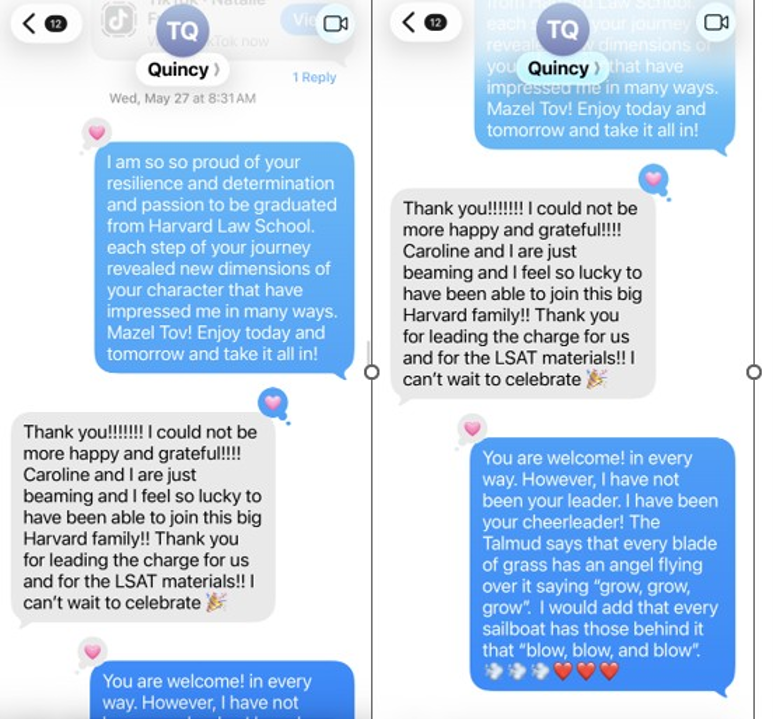
Yesterday, my older daughter Caroline successfully matched in her pursuit of medical residency. I have always admired her determination and academic excellence. But what I am most proud of is something quieter.

When Caroline and Lucy played hide and seek, Caroline often chose to be found first—allowing Lucy the joy of winning.

As Caroline now begins her journey as a physician, I see that this was never a small gesture. It was an early expression of something deeper—a hidden strength of kindness. A physician enters the most hidden places in a person’s life—the moments of fear, pain, and vulnerability few want seen. Caroline has been practicing for this her entire life, not in hospitals, but in a house in Boston, in a game of hide and seek, learning that sometimes the most generous thing you can do is let someone else be found first.

As we approach this year’s Passover Seder, we can see the afikoman not as something lost, but as something waiting for us to become the kind of people who are ready to be found.

Hidden all along
We search far for what we hold
Ready to be found

The Hardest Thing I Did Not Do

“Yes,” I replied. “It was.”

“Why did you not tell us earlier? Yesterday was such a difficult conversation,” my daughter said.

“I waited a long time for the right moment.”

Yesterday was difficult.
But I have thought about yesterday’s conversation every day for months.
Each day, I told myself: not yet.
I paused myself.
I waited.

“You are such amazing daughters,” I said. “I am so proud of you. I try to help you in any way I can. Sometimes the hardest thing about being a father is not what I do. It is what I do not do.”

There are moments when doing nothing is not avoidance. It is discipline. It is love refusing to force a moment before it is ready.

The sages teach tzimtzum: contraction, the act of making space. God withdraws so the world can breathe. Absence is not a void; it is the cradle where presence can be born. I have come to believe that love is often measured not by how much we fill a moment, but by how gently we step back so another soul can step forward.

You can see this everywhere once you begin to look. A parent pauses before correcting a child, and the child discovers courage. A teacher leaves a question hanging, and a student finds her own voice. In the boardroom, silence after a pitch sometimes allows the best idea to surface without being muscled by volume or title. Presence can be born from absence.

Grief taught me tzimtzum most honestly. When a chair is empty at the table, we learn to set a place in the heart. We do not get over absence, we grow around it.

There is one Torah story that always returns to me: the Binding of Isaac.

The power of that moment is not the drama of the mountain. It is the space inside it.

God could have made Abraham’s path obvious. God could have surrounded him with certainty so complete that choice disappeared. But that would not be faith. That would be coercion.

Instead, God creates space, an uncomfortable and excruciating space, where Abraham must choose.  In that space, something new is born: not obedience as reflex, but faith as decision. The first true faith is not forced. It emerges from the room God makes for a human being to step forward freely.

Tzimtzum is what makes relationship possible. Without space there is only pressure, even when it is wrapped in love.

Shabbat is a weekly reminder of this truth. We stop doing so that being can return.

And the desert teaches it too. No clutter, no cover, just enough emptiness to hear what cannot be heard anywhere else.

Absence is not abandonment. It is a gift of trust.

As I sat with my daughters after that difficult conversation, I understood something I could not have said earlier: I did not wait to avoid the hard thing. I waited so the hard thing could be held with love.

P.S. I woke up this morning to an email from Lucy: “I’ve been thinking a lot about our conversation and your advice… if you want to write a few more thoughts, I’d value them. Love, Lucy.”

Empty chair, full heart,
in what we choose not to hold,
blessing learns to land.

Lifting My Hands

“Would you please wash your hands?” Joan asked.

“I always do,” I said.

“No, I mean, would you begin each morning by washing your hands?”

I didn’t understand. Washing my hands? I had done that my entire life. What could be so important about something so simple?

It was January 22nd, 2026, the yahrzeit of the Baba Sali, Rabbi Israel Abuhatzeira. I had written previously about Joan’s family and their connection to him. She told me that if I prayed to Hashem in his merit on that day and committed to begin a new mitzvah, I would invite blessing into my life.

So I began washing my hands each morning when I woke up.

“Did you say the blessing?” she asked. “Did you wear a kippah?”

I said no to both.

The next morning, she handwrote the prayer and taped it to the cabinet by the sink. I read it slowly. I did not fully understand the words. But I recognized one: yadayim — hands.

So I began.

On Shabbat, we were preparing to read Parshat Yitro and the giving of the Ten Commandments. Instead, our rabbi began with the battle against Amalek from the preceding section. I wondered why he was not speaking about Mount Sinai. Then he began to speak about hands.

Our rabbi explained that when Moses raised his hands, the Children of Israel prevailed. When his hands lowered, Amalek prevailed. Moses’ hands grew heavy and required the support of Aaron and Hur in order to remain raised. Even elevation is not sustained alone.

Why would victory hinge on the position of Moses’ hands?

The rabbi explained: lowered hands pull us downward toward the ground. Lifted hands position us toward Heaven.

As an aside, a boxer keeps his hands raised to protect himself. Active hands serve as a shield. But when hands rise above the head, one is  exposed and vulnerable. To lift your hands in faith is to trust protection beyond yourself.

As a Kohen, I realized something more personal. Kohanim lift their hands to bless the people. In the Mishkan, Kohanim also washed their hands before entering sacred service.

I had written elsewhere about the posture of hands while eating: how slavery keeps them reaching downward, how the wilderness trains them to lift, how the Promised Land invites them to reach to the trees for the fruit and to the ground to plant the seeds. Now the metaphor was no longer theoretical, but embodied.

One morning at the sink, I paused over the word netilat in the blessing.

What does that mean? I wondered. I had always assumed it meant “washing.” It does not. It means “lifting.” Al netilat yadayim: concerning the lifting of the hands. Not merely washing, but lifting.

That is why the morning blessing can be a quiet echo of the Exodus. We do not bless Hashem merely “for washing” our hands; we bless for lifting them. It is the spiritual start of the day.

Sleep can feel like a kind of slavery, a temporary surrender of awareness. Waking is a small liberation. When we rise, we wash as though passing through the Sea of Reeds. As we climb out of bed, we enter a wilderness moment, uncertain and unscripted, and lift our hands in praise. At the sink, we receive a silent Sinai. Then the day stretches before us like a Promised Land.

The Promised Land resembles the fullness of the day: work, responsibility, cultivation, blessing. Freedom is not only waking up; it is living forward with purpose once awake.

Each morning, before emails, before conversations, before Zoom meetings…before it all; I stand at the sink and wash and I lift. It is a simple act. Water over skin. My hands raised in gratitude; not for what has already happened, but for what the day may bring.

Such a small ritual. Such a quiet moment at the mountain.

All because of Joan’s simple request: “Would you wash your hands?”

Her handwritten note beside the sink.

A small lift.

My spiritual springboard into the day.

Hands rise from the sink
Sleep loosens its narrow hold
A quiet Sinai

Appendix: The Morning Blessing for the Lifting of the Hands

The blessing recited upon waking and washing the hands:

Hebrew

בָּרוּךְ אַתָּה יְיָ אֱלֹהֵינוּ מֶלֶךְ הָעוֹלָם
אֲשֶׁר קִדְּשָׁנוּ בְּמִצְוֹתָיו
וְצִוָּנוּ עַל נְטִילַת יָדָיִם

Transliteration

Baruch Atah Adonai, Eloheinu Melech ha-olam,
asher kid’shanu b’mitzvotav,
v’tzivanu al netilat yadayim.

Translation

Blessed are You, Lord our God, King of the universe,
who has sanctified us with His commandments
and commanded us concerning the lifting of the hands.

Further Reading

If the themes of hands, freedom, and spiritual posture resonate, you may enjoy these related reflections:

The Magic Carpet Was Never About Flying

A reflection on Joan’s family, the Baba Sali, and the deeper meaning of faith, merit, and responsibility within Jewish tradition.

What Freedom Tastes Like

An exploration of the Exodus through food. How slavery, wilderness, and the Promised Land are revealed not only in geography, but in what the Children of Israel ate, remembered, and imagined.

What Freedom Tastes Like

Food of the Exodus

Freedom has a taste. Not a single taste, but a progression.  Each stage of liberation is marked by what the Children of Israel ate, what they remembered, and what they imagined. The Exodus story can be traced through food, because food reveals orientation: whether the Children of Israel look backward toward familiarity, experience an initial moment of freedom, or look forward toward possibility and responsibility.

Food of Slavery

Despite reaching freedom by escaping Egypt, the Children of Israel complained bitterly in the wilderness. One of their central complaints was about the discomfort of the present, expressed through longing for the food of the past. They spoke of garlic, leeks, and onions pulled from the ground. All rooted foods from the adama. They remembered what was familiar while overlooking the suffering that defined their bondage, clinging to the false comfort of what they once knew.

The complaint was not really about taste; it was about fear. Slavery, at least, felt known. Even a painful past can feel more familiar, and therefore safer than a future that demands change.

The Torah exposes a difficult human truth: the Children of Israel often complained about the present by romanticizing what once enslaved them. Memory becomes a refuge from uncertainty, even when that memory distorts the truth.

Food of the Wilderness

The wilderness introduced an entirely new relationship with food. Manna did not come from the ground and did not grow on trees. It fell from the sky—daily, exact, and sufficient. It could not be stored. It could not be controlled. Manna forced a newly freed Children of Israel to experience freedom of the present.

Manna was not only nourishment; it was education. It trained the Children of Israel to gather enough and then stop. To live without hoarding, to trust tomorrow’s portion, and to learn what enough truly means.

With manna came the first Shabbat. For the first time, sacred time entered Israel’s life through food. A double portion fell before Shabbat and gathering was forbidden on the day itself. The lesson was radical: survival did not require constant labor. Freedom was marked not by movement, but by restraint and trust.

We continue to celebrate the lessons of the wilderness today. The double portion lives on each week in the two challahs placed on the Shabbat table. They are not decoration; they remind us to pause, to prepare, and to trust.

Blessings reinforce this education. Some foods come from the ground and others from trees, each requiring a different blessing. This practice is explored more fully in Savor the Celebration. Even before interpretation, the act of blessing teaches orientation: earth below (adama), growth above (ha’etz), and beyond both (shehakol), a Source not fully seen. Manna, belonging to neither soil nor branch, completed the lesson. Not all sustenance is earned the same way. Not all freedom is built on control.

Food of the Promised Land

When the twelve spies entered the Promised Land, they did not return remembering what once was. They returned carrying fruit: grapes, figs, and pomegranates declaring: “This is its fruit.” Their language was not nostalgic; it was demonstrative. Not memory, but evidence.

The contrast is deliberate. The Children of Israel remembered slavery in Egypt, using the past to protest the hardship of the present. The twelve spies spoke of the land by pointing forward, holding in their hands proof of what could grow. The food of the Promised Land was not about immediate consumption, but about future cultivation. Trees that bear fruit, seeds that regenerate, and abundance that unfolds over time.

Another way to see this progression is through how we use our hands to eat. Animals eat with their mouths lowered to the ground. The food of slavery—garlic and leeks—were taken in much the same way, with hands reaching downward into the earth.

In the wilderness, the posture of the hands changed. Manna was gathered from the sky and carried with care, training the hands to move between levels. Reaching downward to gather, held at the center with intention, and lifted upward toward the heavens in faith.

In the Promised Land, food comes from trees—figs, olives, and pomegranates—requiring the hands to reach upward, almost in a posture of praise. When the hands return to the earth, it is no longer to clutch, but to plant. To place seeds gently into the ground for future growth.

The Torah’s food story reveals a lasting struggle: leaving slavery is easier than leaving the mindset it creates. Complaining about the present often disguises itself as longing for the past. True freedom begins when desire itself is retrained. When memory no longer anchors us backward and faith allows us to move forward.

When the Children of Israel looked backward, they complained about the present and idealized the food of slavery; when the spies looked forward, they carried fruit from the land.

Every Shabbat, when two challahs rest on the table, the journey is quietly reenacted. We remember the ground, the sky, and the trees. We bless what sustained us, what grows among us, and what we cannot control. We remind ourselves that liberation is not only escape from what was, but the courage to believe in what can still grow.

Slavery fed memory, the wilderness taught faith, and the Promised Land invites the Children of Israel to plant, tend, and believe in a future that will grow.

Hands once reached downward
Then lifted, learning to trust
Now they plant and bless

Appendix: Torah Sources on Food, Memory, and Freedom

  1. Food of Slavery — Mitzrayim (“Narrow Place”)

In Egypt, the Israelites ate foods later remembered as the food of slavery, all described as coming from the ground and associated with familiarity and predictability.

  • Numbers 11:4–5 (JPS, p. 307)

“The riffraff in their midst felt a gluttonous craving… We remember the fish that we used to eat free in Egypt—the cucumbers, the melons, the leeks, the onions, and the garlic.”

  1. Food of the Wilderness — Midbar

The wilderness introduces an entirely new form of sustenance: manna, food that comes neither from soil nor from trees, but directly from heaven. It is given daily, cannot be hoarded, and is paired with the first experience of Shabbat.

Manna

  • Exodus 16:15–16 (JPS, p. 148)

“When the layer of dew lifted, there on the surface of the wilderness lay a fine and flaky substance… Moses said to them, ‘That is the bread which the Lord has given you to eat.’ … The House of Israel named it manna.”

Shabbat and the Double Portion

  • Exodus 16:26 (JPS, p. 149)

“Eat it today, for today is a Sabbath of the Lord; you will not find it today on the plain. Six days you shall gather it; on the seventh day, the Sabbath, there will be none.”

Spiritual Framing

  • Deuteronomy 8:2–3 (JPS, p. 393)

“God subjected you to the hardship of hunger and then gave you manna to eat… in order to teach you that man does not live on bread alone, but that man may live on anything that the Lord decrees.”

III. Food of Freedom — Eretz Zavat Chalav U’Dvash (Promised Land)

The Promised Land is consistently described through abundance, sweetness, and cultivation. Its food grows from trees and fields, requiring time, patience, and partnership with the land.

Divine Promise

  • Exodus 3:8 (JPS, p. 116)

“I will rescue them from the Egyptians and bring them… to a land flowing with milk and honey.”

Report of the Spies

  • Numbers 13:23 (JPS, p. 312)

“They reached the wadi Eshcol, and there they cut down a branch with a single cluster of grapes… and some pomegranates and figs.”

Vision of Abundance and Gratitude

  • Deuteronomy 8:7–10 (JPS, p. 393)

“For the Lord your God is bringing you into a good land… a land of figs and pomegranates, a land of olive trees and honey… When you have eaten your fill, give thanks to the Lord your God for the good land which He has given you.”