
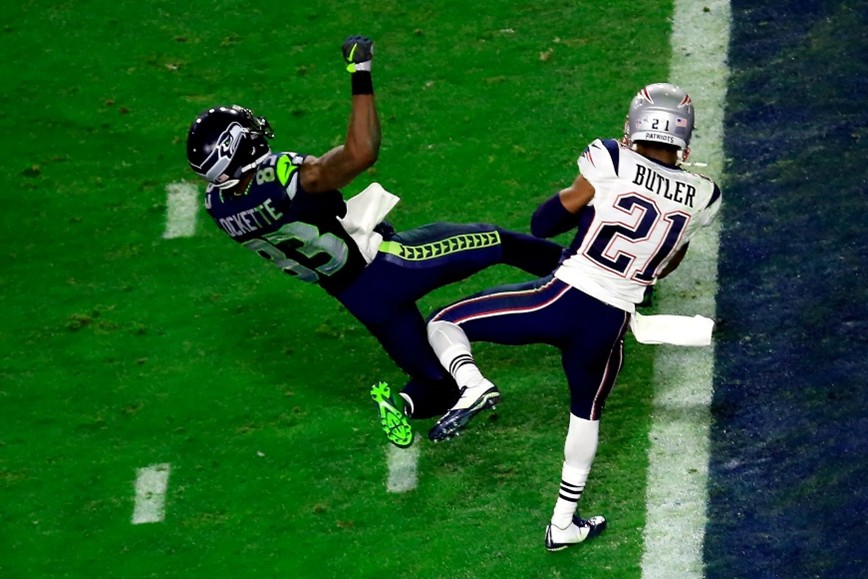
Super Bowl XLIX. February 2015. The New England Patriots versus the Seattle Seahawks. Seconds remaining. Seattle is on the one-yard line, widely expected to win. Instead of running the ball, they throw a quick slant—and Malcolm Butler intercepts it, sealing the game.
At first glance, it looks like a shocking mistake or a miraculous defensive play. It was neither. It was the visible outcome of a system.
The Patriots had studied this exact formation and scenario through film, statistics, and repetition. Down, distance, formation, and clock all pointed to a high-probability slant route. In real time, the coaching staff ensured the right personnel was on the field. Butler, who had practiced this exact play repeatedly, recognized the pattern instantly and executed without hesitation.
What appeared to be improvisation was actually coordinated execution.
This is how I think about agentic AI.
An NFL team is a real-time, multi-agent system composed of interconnected layers. The data layer includes opponent film, player statistics, injuries, weather, and live game context—score, time, field position, and formation. It creates a continuously updated representation of reality.
The learning layer emerges through film study, analytics, repetition, and adjustment. Teams identify patterns and tendencies, effectively building predictive models of opponent behavior. This learning occurs both before the game and during it through feedback loops.
The player layer contains multiple agent roles—not all agents are the same. Most operate as bounded executors: linemen block, receivers run routes, defensive backs cover assignments. Some interpret signals and adapt in real time. A few coordinate others. This is a heterogeneous system defined by role clarity under constraint.
The orchestrator on offense is the quarterback. He functions as the control plane: processing real-time inputs, reading the defense, calling audibles, and coordinating specialized actors under extreme time pressure. But his most important contribution is not always initiating action—it is knowing when to stop it. A quarterback who throws the ball out of bounds to avoid a sack, fumble, injury, or interception is preserving system integrity by refusing a catastrophic path. Orchestration is not just sequencing—it is governing execution, managing risk, and terminating actions when conditions degrade.
This architecture enables coordination, but it also creates concentration risk. Because coordination is centralized, a failure at the orchestrator layer can invalidate otherwise correct downstream execution. A misread, delay, or miscommunication can collapse the entire play—even if every other agent performs correctly.
The head coach operates as human-over-the-loop. He defines strategy, sets constraints, establishes risk tolerance, and intervenes only when judgment, accountability, or exception handling is required. He is not executing the play—he is governing the system.
The Guardian layer operates orthogonally to the workflow. Referees, replay review, and the NFL rulebook monitor actions, enforce constraints, validate outcomes, and stop violations. This layer does not participate in execution—it ensures integrity across it.
Football also illustrates how decisions span time horizons. Some are pre-designed through game planning. Some are real-time through quarterback reads. Some are escalated to coaching judgment. Injuries, substitutions, clock pressure, and unexpected formations require continuous adaptation. The critical question is not whether everything is scripted, but whether decision rights are clear and execution pathways are well governed.
This brings us back to Butler.
In that moment, the system worked exactly as designed. The data and learned patterns identified the likely play. The coach had established the strategic conditions and personnel choices that made the response possible. Butler, as a trained agent, recognized the signal and executed within his role. The outcome was not luck—it was alignment.
What football makes clear is that intelligence does not reside in any single actor. It emerges from coordinated interaction.
Agentic systems work the same way.
They succeed not because they are smarter in isolation, but because they are better orchestrated—especially when they know when not to act.
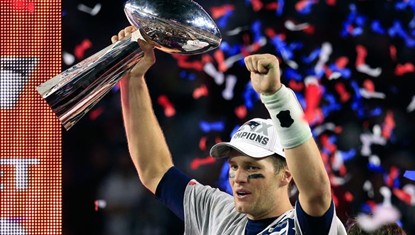
Reader note: This companion reflection applies the ideas explored in “Learning How to Ask” through the lens of agentic AI and the NFL. It is designed as an operational case study rather than a standalone Breaking Matzo philosophical essay.
For readers seeking a more traditional Breaking Matzo spiritual framework connecting the New England Patriots, football, and Torah, please also see “Tom Brady’s Touchdown Tosses Teach Torah,” which explores the Patriots dynasty through the lens of Jewish spiritual growth.