
I am always looking for delicious vegetarian dishes when entertaining, especially during Sukkot. I love putting together a table with an abundance of colorful options that invite family and friends to linger, talk, and enjoy a leisurely meal in the Sukkah.
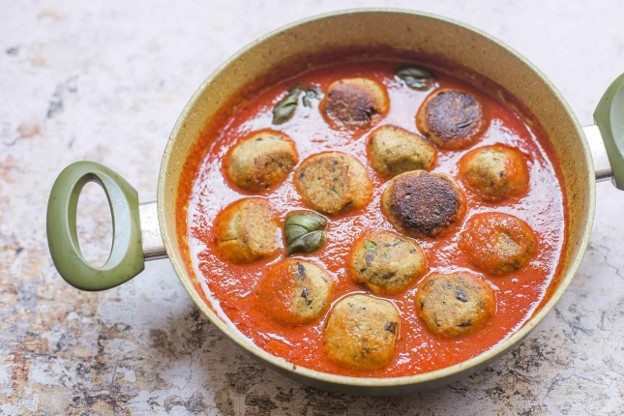
One of my favorites is Polpette di Melanzane, traditional Italian eggplant meatballs. Crisp on the outside and tender inside, they are made with roasted eggplant, Pecorino cheese, fresh basil, parsley, garlic, and breadcrumbs, then gently simmered in a simple tomato sauce. They are comforting, flavorful, and perfect for serving a crowd.
I first made this recipe for Caroline and Quincy’s engagement dinner on December 22, 2023. It was such a joyful evening, and the dish has been part of our family celebrations ever since.
As I was making them again this year, I found myself thinking about the story behind the recipe and how it connects to one of the beautiful ideas of Sukkot.
For generations, families throughout southern Italy made polpette di melanzane as part of cucina povera, literally “the cooking of the poor.” It was a style of cooking built on creativity rather than abundance. Nothing was wasted. Ingredients that were inexpensive, plentiful, or easily overlooked were transformed into something worthy of the family table.
The eggplant slowly softens in the oven until it becomes rich and silky. Mixed with Pecorino cheese, breadcrumbs, herbs, and garlic, it takes on a whole new character. What might have been an ordinary vegetable becomes something extraordinary.
That simple transformation reminded me of Sukkot. The sukkah has one unusual requirement. Its walls can be made from many different materials, but its roof must be made from what is left behind after the harvest: stalks, branches, and cuttings once the grain and grapes have been gathered. At first, that seems surprising. Why would something left behind become the defining feature of the sukkah?
Sukkot reminds us that value is not always found in what we keep. Sometimes it is found in what remains. The remnants of the harvest become the roof that shelters us. Just as a humble eggplant becomes the centerpiece of a holiday meal. Both remind us that abundance is not measured by having more, but by the blessings hidden in what is left behind.
As you gather with family and friends this Sukkot, I hope you will enjoy these Polpette di Melanzane, and perhaps see the holiday, and your table, a little differently.
Eggplant Meatballs (Polpette di Melanzane)
Serves 4 to 6
Ingredients
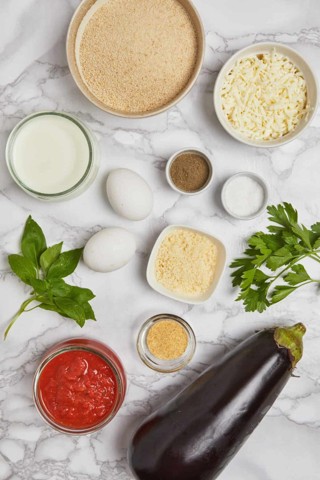
Eggplant Meatballs
- Vegetable oil cooking spray
- 1 (1-pound) eggplant, ends trimmed and halved lengthwise
- 1 tablespoon extra-virgin olive oil
- 1 cup grated Pecorino cheese
- ½ cup plain breadcrumbs, plus more if needed
- ¼ cup chopped fresh basil
- 2 tablespoons chopped Italian flat-leaf parsley
- 2 cloves garlic, minced
- 1 large egg, beaten
- Salt and freshly ground black pepper
Simple Tomato Sauce
- 2 tablespoons olive oil
- 1 small onion, diced
- 2 cloves garlic, minced
- 2 large tomatoes, chopped
- 1 cup cherry tomatoes, halved
- Fresh basil
- Italian parsley
- Salt and pepper
Directions
Roast the Eggplant
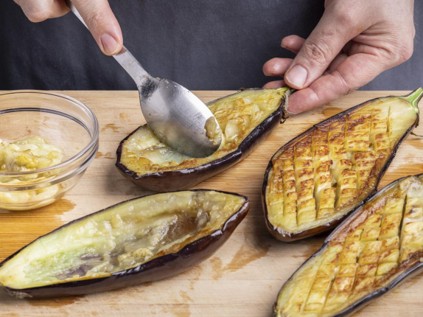
Preheat the oven to 400°F (200°C). Lightly spray the eggplant halves with cooking spray and place them cut-side down on a baking sheet. Roast for 35 to 40 minutes, until completely tender. Allow them to cool slightly, then scoop the eggplant into a mixing bowl.
Make the Meatballs

Mash the roasted eggplant until smooth. Add the Pecorino cheese, breadcrumbs, basil, parsley, garlic, egg, salt, and pepper. Mix until well combined. If the mixture feels too soft to shape, add a few more breadcrumbs. Form into golf ball sized meatballs.
Brown the Meatballs

Heat the olive oil in a large skillet over medium heat. Brown the meatballs on all sides, turning gently, for about 6 to 8 minutes.
Prepare the Sauce
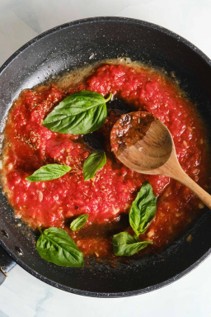
In a saucepan, heat the olive oil and sauté the onion until soft. Add the garlic and cook for another 30 seconds. Stir in the chopped tomatoes and cherry tomatoes and simmer for about 20 minutes. Finish with fresh basil, parsley, salt, and pepper.
Finish
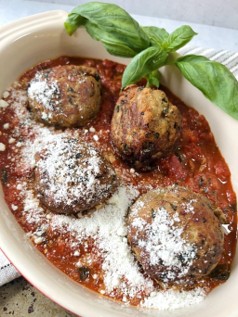
Place the browned meatballs into the tomato sauce and simmer gently for 10 to 15 minutes. Serve with extra grated Pecorino, fresh basil, and crusty bread or your favorite pasta.
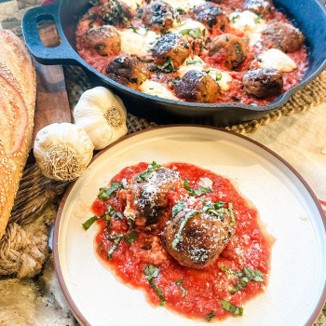
May your Sukkot be filled with family, friendship, gratitude, and an abundance of blessings, especially those found in the simplest gifts that remain.
Shopping List
Produce
- 1 eggplant
- Fresh basil
- Italian flat-leaf parsley
- Garlic
- 1 onion
- 2 large tomatoes
- Cherry tomatoes
Dairy
- Pecorino cheese
- 1 egg
Pantry
- Plain breadcrumbs
- Extra-virgin olive oil
- Vegetable cooking spray
- Salt
- Black pepper
For readers interested in the biblical and rabbinic ideas behind this recipe, here are a few wonderful places to explore:
- Devarim (Deuteronomy) 16:13. Sukkot is celebrated at the completion of the harvest, after gathering from the threshing floor and winepress.
- Babylonian Talmud, Sukkah 12a. The rabbis explain that the roof (schach) of the sukkah should be made from materials that grew from the ground and remain after the harvest, such as stalks and branches.
- The Hebrew Words. The rabbis of the Talmud describe these harvest remnants as pesolet goren v’yekev, the leftovers of the threshing floor and winepress. The word pesolet shares its Hebrew root with pasul, meaning unfit or disqualified. Jewish tradition transforms these humble remnants into the very material that forms the roof of the sukkah.
- Cucina Povera. The Italian tradition of “the cooking of the poor” celebrates ingenuity, transforming simple, inexpensive ingredients into memorable meals. Polpette di Melanzane is one of its classic expressions.
- History of the Jews in Italy: The remarkable story of more than 2,000 years of Jewish life in Italy is one of resilience, creativity, and enduring faith, a beautiful backdrop for many of the country’s beloved recipes.