There is a particular happiness to sitting at a full table inside the sukkah on Sukkot. The holiday celebrates the fall harvest. It asks us to gather with food and wine and rejoice.
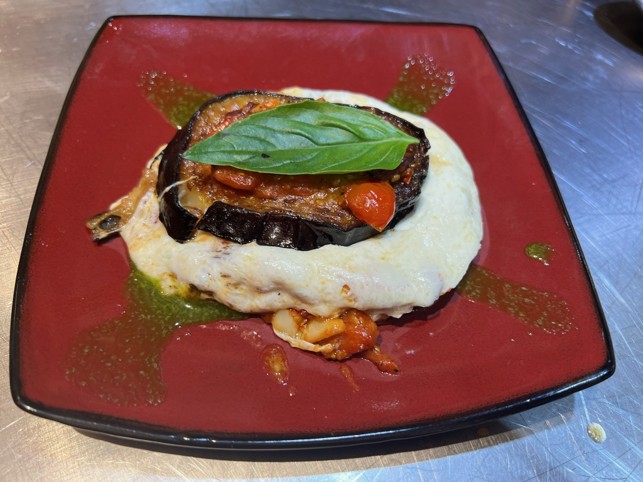
One of my favorite dishes for Sukkot is eggplant parmigiana, melanzane alla parmigiana. Crisp at the edges, tender inside, built in layers of fried eggplant, tomato, mozzarella, and basil. It comes from southern Italy, from what the Italians call cucina povera, the cooking of the poor.
The eggplant was once a cheap vegetable nobody would have called holiday food. Yet as you salt it, fry it until it turns gold, and lay it down with sauce and cheese, the humble vegetable becomes something extraordinary. Its whole secret is simplicity: a few plain ingredients, layered with care.
That is the quiet argument of Sukkot too. We build the sukkah in layers, walls and then a roof. The rabbis tell us to lay across it pesolet goren v’yekev, the leftovers of the threshing floor and winepress (Sukkah 12a), the stalks we would otherwise sweep away. From simple, discarded things we build the holiest dwelling of the year.
The eggplant and the sukkah are the same idea: layered, simple, and made from the humblest parts of the harvest. So, make the eggplant, carry it to a table under a roof of branches, and taste how the ordinary becomes extraordinary.
Eggplant Parmigiana (Melanzane alla Parmigiana)
Serves 4 to 6
Ingredients
For the Eggplant
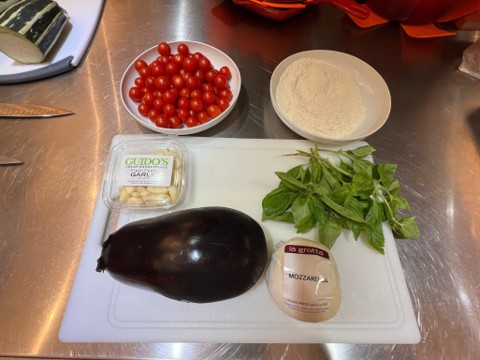
- 1 large globe eggplant (about 1.5 pounds), sliced into half inch rounds
- Kosher salt and freshly ground black pepper
- 1 cup all-purpose flour, for dredging
- Sunflower or other neutral oil, for frying (about 1 cup)
For the Tomato Sauce
- 1/4 cup extra virgin olive oil
- 8 to 10 garlic cloves, thinly sliced
- 3 to 4 anchovy fillets
- 2 pints cherry tomatoes, halved
- A handful of fresh basil, torn
- Salt, to taste
- A pinch of red pepper flakes (optional)
To Assemble
- 1 pound fresh mozzarella, torn or sliced
- 1 large bunch fresh basil, leaves torn
- Grated Parmigiano-Reggiano, to finish (optional but traditional)
Directions
- Slice and Salt the Eggplant
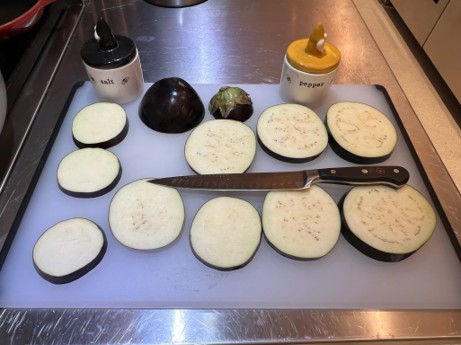
Slice the eggplant into half inch rounds. Lay them out, season both sides with salt and pepper, and let them sit for 20 to 30 minutes to draw out their moisture. Pat dry.
- Dredge in Flour
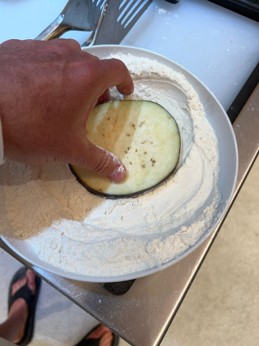
Coat each round lightly in flour, pressing gently and shaking off the excess. A thin, even dusting is all you want.
- Fry Until Golden
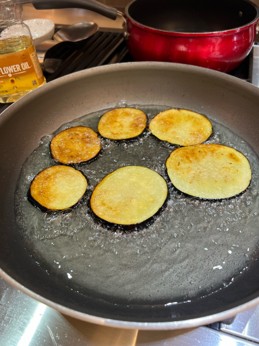
Heat about a quarter inch of sunflower oil in a wide pan over medium-high heat. Fry the rounds in batches until deep gold on both sides, 2 to 3 minutes per side.
- Drain the Fried Eggplant
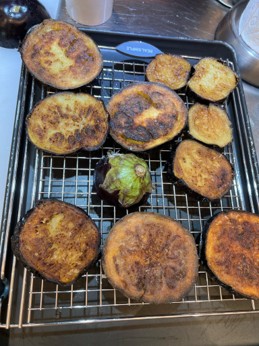
Lift the rounds onto a wire rack or paper towels to drain. They should be crisp at the edges, tender within. Season with a little salt while still warm.
- Build the Sauce
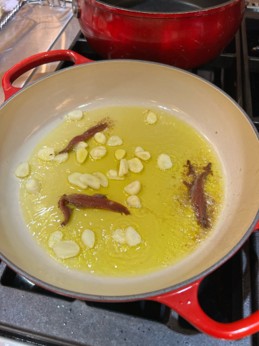
In a separate wide pan, warm the olive oil over medium heat. Add the sliced garlic and the anchovies and cook gently until the garlic is pale gold and the anchovies melt into the oil, 2 to 3 minutes.
- Add the Tomatoes and Basil
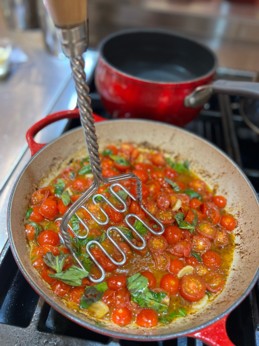
Add the halved cherry tomatoes with a pinch of salt. Cook until they slump and release their juice, 10 to 12 minutes, then stir in the torn basil and gently crush the tomatoes into a loose, bright sauce.
- Build the Layers
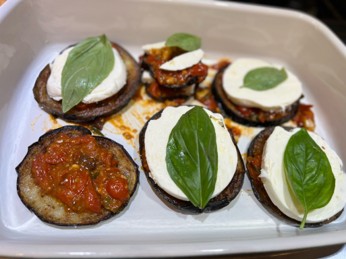
Set a fried eggplant round down in a baking dish, spoon on some sauce, and top with a slice of mozzarella and a basil leaf. Continue with the rest, finishing each with a shower of Parmigiano.
- Bake
Bake at 375 degrees until bubbling and the cheese is molten and just golden, 25 to 30 minutes.
- Rest and Serve
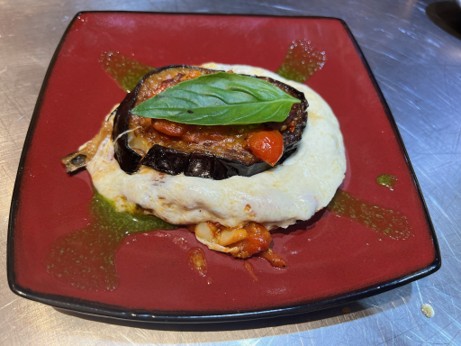
Let it settle for 10 minutes so the layers set. Finish with fresh basil, and carry it out to the table.
Shopping List
Produce
- 1 large eggplant
- 2 pints cherry tomatoes
- 1 head garlic (or a container of peeled cloves)
- 1 large bunch fresh basil
Dairy
- 1 pound fresh mozzarella
- Parmigiano-Reggiano
Pantry
- All-purpose flour
- Extra virgin olive oil
- Sunflower or other neutral oil, for frying
- Anchovy fillets
- Kosher salt and black pepper
- Red pepper flakes (optional)
Further Reading:
For readers drawn to the ideas beneath this dish, here are a few places to explore how Sukkot turns the humble harvest into something holy.
- Devarim (Deuteronomy) 16:13. The command to keep the Feast of Booths after the ingathering from your threshing floor and your winepress, binding the festival to the fall harvest.
- Sukkah 12a. The rabbis of the Talmud teach that the sukkah’s roof be made of pesolet goren v’yekev, the leftovers of the threshing floor and winepress, so the discarded stalks become the sacred shelter.
- Cucina povera. The southern Italian cooking of the poor, which turns humble ingredients like eggplant into feasts. The name parmigiana may come from the Sicilian parmiciana, the overlapping wooden slats of a shutter, for the way the eggplant is layered.
- Breaking Matzo, Sukkot. You can find more on the holiday and its traditions here.
May your sukkah be full, your table crowded, and the simplest things upon it turn out to be the most blessed.