
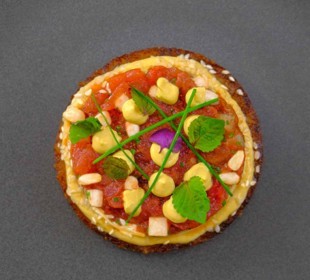
Some dishes are about replacement; others are about re-seeing what’s already there. This one belongs firmly to the second category.
I’ve long been fascinated by how much our experience of flavor begins before the first bite. We taste with our eyes long before we taste with our mouths. With this tomato “tuna” tartare, the goal isn’t to convince anyone they’re eating fish, but to borrow the visual language and mouthfeel of classic tuna tartare and reinterpret it using plants.
That instinct feels especially at home on Purim, the holiday of disguise and reversal. Esther hides her identity in plain sight. God is never named, yet everywhere. V’nahafoch hu—everything is the opposite of what it first appears to be. Like Purim itself, this dish wears a costume, not to deceive, but to invite a second look.
Tomatoes have the deep red hue and gentle acidity we associate with raw tuna. By removing the seeds and watery pulp, we’re left only with the firm tomato flesh. What I like to think of as tomato meat. By finely dicing it and letting it slowly dry it develops density and structure. Dates add subtle sweetness and a soft chew that echoes the tenderness of tuna, while soy and seaweed quietly provide umami.
This dish sits naturally alongside earlier Breaking Matzo explorations—like watermelon “tuna” sashimi—not as novelty, but as meditation. A reminder of how memory, expectation, and creativity intersect at the table, and how surprise, when handled gently, can become a form of joy.
Served chilled and molded into a small tower, it invites a pause. It asks the diner to look twice and then, like Purim itself, to delight in the reveal.
Vegan Tomato “Tuna” Tartare
Serves 4 as an appetizer · Preparation ~30 minutes (+ optional chilling)
Ingredients
6 large ripe tomatoes (Roma or plum preferred)
6–8 pitted Medjool dates, finely diced (about ½ cup)
2–3 tbsp soy sauce or tamari
1–2 tsp toasted sesame oil
1–2 tbsp rice vinegar or fresh lime juice
1 tsp freshly grated ginger (optional)
2–3 scallions or chives, finely chopped
1 small garlic clove, minced (optional)
1–2 tsp seaweed flakes (nori or dulse), crumbled
Salt and freshly ground black pepper, to taste
Optional additions:
½ Asian pear or cucumber, finely diced
1–2 tbsp toasted sesame seeds or pine nuts
A touch of heat: chili oil or sriracha
For serving:
Avocado slices, sesame seeds, crispy rice cakes or toast, optional spicy vegan mayo
Preparation
Prepare the tomatoes: Score a small X at the base of each tomato. Blanch briefly (30–60 seconds), then transfer to ice water. Peel, halve, and remove all seeds and watery pulp so you are left only with the firm tomato flesh. Finely dice into small, even cubes, about ¼ inch.
For a firmer, more “tuna-like” texture, spread the diced tomato flesh on a baking sheet and place in a low oven (250°F / 120°C) for 20–30 minutes to gently remove excess moisture without cooking.
Prepare the dates: Finely dice the Medjool dates to match the size of the tomatoes. Their natural sweetness brings balance and quiet richness.
Mix the tartare: Gently combine tomatoes, dates, soy sauce, sesame oil, vinegar or lime juice, ginger, scallions, garlic, and seaweed flakes. Fold carefully. Taste and adjust.
Chill for 30–60 minutes to allow the flavors to settle.
Plate with intention: Shape the tartare into a neat cylinder using a ring mold. Finish with sesame seeds, chives, or a light drizzle of sesame or chili oil. Serve with avocado and something crisp.
What makes this dish work isn’t illusion, it’s balance. Appearance from color and gloss. Texture from restraint and patience. Flavor from harmony rather than force. It isn’t tuna, but on Purim that’s exactly the point.
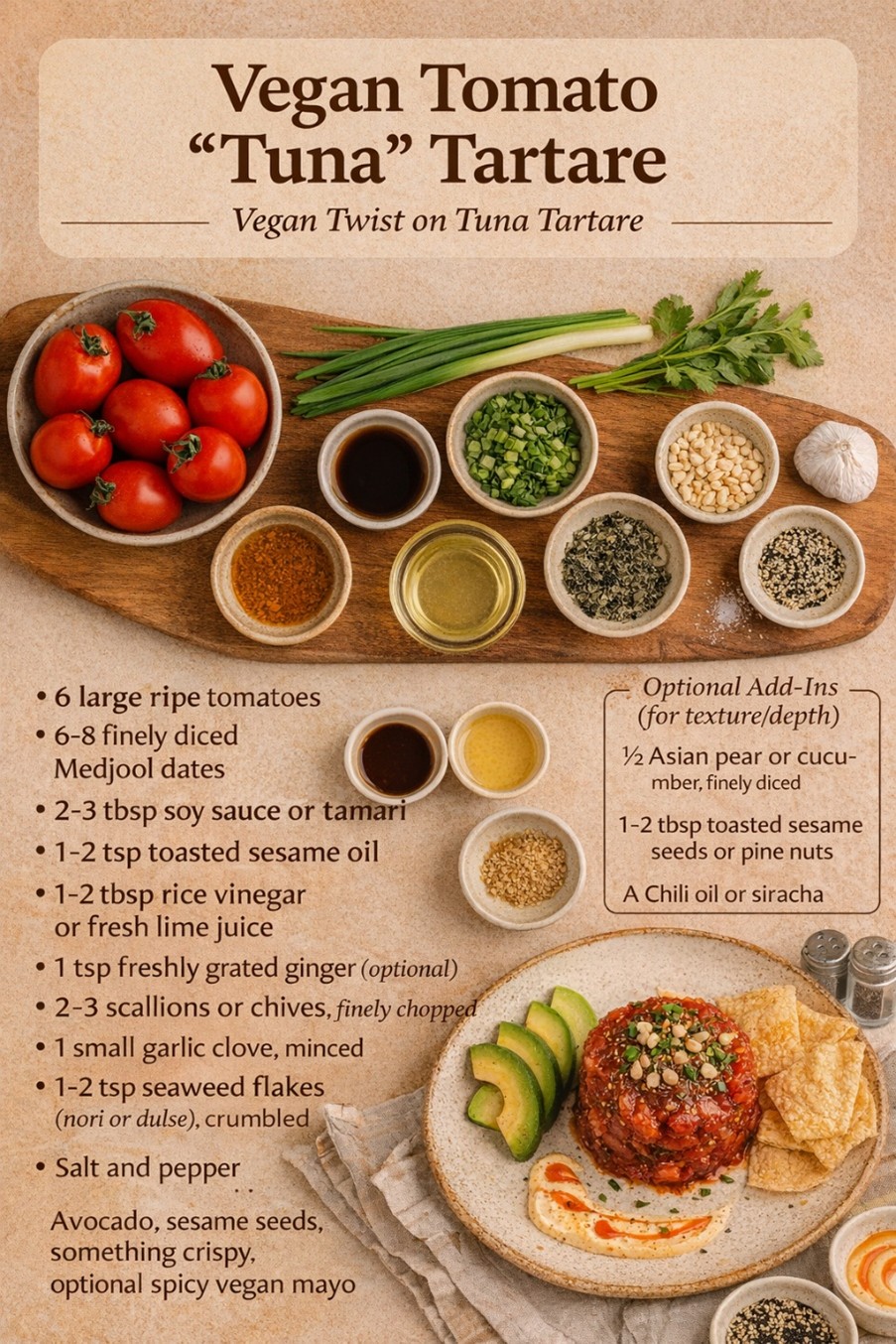
You can find our recipe for Watermelon “Tuna” Sashimi here.