
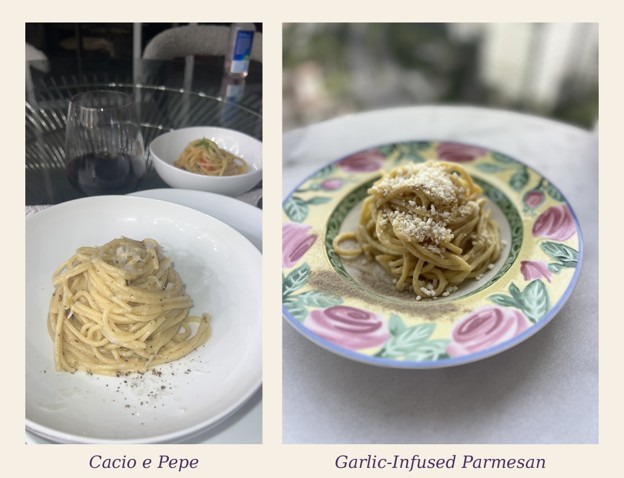
Two Cousins at the Italian Table
Garlic-Infused Parmesan Pasta & Cacio e Pepe
One celebrates pepper. The other celebrates garlic. Both remind us that the simplest ingredients often reveal the deepest truths.
When people think of classic Roman pasta, Cacio e Pepe usually comes first. It has just three ingredients: Pecorino Romano, Black pepper, and Pasta.
Its cousin, Garlic-Infused Parmesan Pasta, receives far less attention. This dish has five ingredients: Garlic, Olive oil, Parmesan, White pepper, and Pasta It speaks more softly. Instead of the bold bite of cracked black pepper, it offers the mellow sweetness of slowly cooked garlic. Instead of sharp Pecorino, Parmesan melts into a silky sauce.
They are two different expressions of the same Italian philosophy: great cooking begins with restraint. The two dishes remind me of the biblical brothers Moses and Aaron.
God chose Moses to lead Israel, yet he doubted himself. “I am slow of speech,” Moses said.
So Aaron became his voice. Moses carried the vision while Aaron carried the words. Together they completed the mission.
That is exactly how I think about these two pastas.
Cacio e Pepe is Moses. Direct, confident, powerful. Only a handful of ingredients stand between success and failure.
Garlic-Infused Parmesan Pasta is Aaron. Gentler, warmer, and more approachable. The garlic softens the edges and lets the cheese and olive oil speak with elegance instead of intensity.
Neither is better. Each reveals a different side of simplicity.
Italian cooking has always fascinated me because it asks so little from the pantry and so much from the cook. There is nowhere to hide. When there are only four ingredients, every decision matters.
Judaism teaches a remarkably similar lesson. The Mishkan, the Tabernacle the Israelites built in the wilderness, was made from simple materials offered by ordinary people. Gold, silver, wood, linen, oil, and spices. Individually they seemed unremarkable, but together they created a place where God’s presence could dwell among the people.
The lesson is timeless. Holiness rarely comes from complexity. It comes from combining simple things with intention.
These two pasta dishes do exactly that.
Classic Cacio e Pepe
Serves 2 to 3
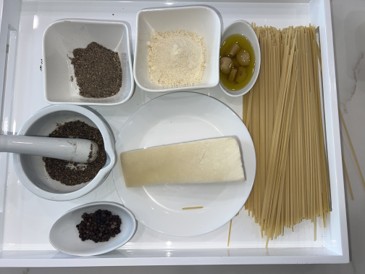
Ingredients
- 10 ounces spaghetti or tonnarelli
- 1 1/2 cups finely grated Pecorino Romano
- 2 1/2 teaspoons freshly toasted black pepper
- Reserved pasta water
- Kosher salt
Directions
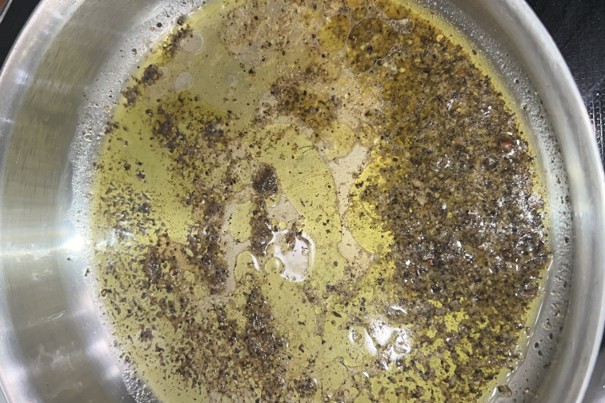
- Toast the freshly cracked black pepper in a dry pan over medium heat until fragrant. For extra depth, warm the peppercorns and a Pecorino rind in the olive oil ahead of time to infuse it.
- Cook the pasta in well salted water until just shy of al dente.
- Reserve at least 2 cups of pasta water, then drain.
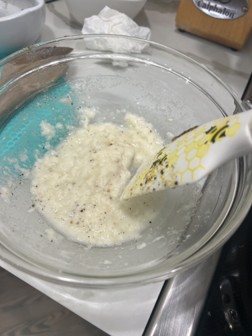
- Create a Pecorino paste by whisking the grated cheese with warm, not boiling, pasta water.
- Toss the pasta with the toasted pepper and a splash of pasta water.
- Gradually work in the cheese mixture while tossing continuously.
- Adjust with a little more pasta water until glossy and creamy.
- Finish with more Pecorino and freshly ground pepper.
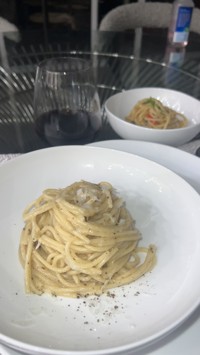
Chef’s Notes
One of my favorite discoveries is infusing the olive oil with a Parmesan rind and toasted peppercorns ahead of time, as in the photo above. It is not strictly traditional, but it quietly deepens the savory flavor without overpowering the dish.
Garlic-Infused Parmesan Pasta
Serves 2 to 3
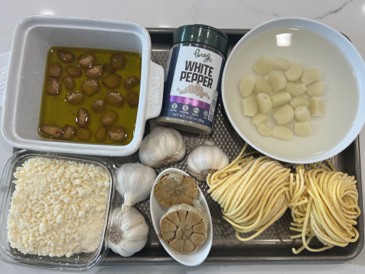
Ingredients
- 8 to 10 ounces spaghetti, linguine, or bucatini
- 1 whole head of garlic, peeled (10 to 12 cloves)
- 1/3 to 1/2 cup extra-virgin olive oil
- 3/4 to 1 cup finely grated Parmesan
- 1 to 1 1/2 teaspoons freshly ground white pepper
- Reserved pasta water
- Kosher salt
Directions
- Boil the garlic. Boil the peeled cloves for 8 to 10 minutes, until completely tender. Drain them, but save the garlic cooking water. Pour that garlic water into the pot you will boil the pasta in, so the pasta itself picks up even more garlic flavor.
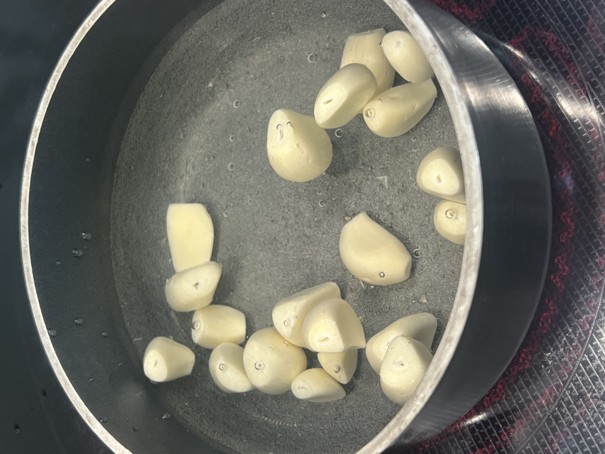
- Blend the emulsion. Blend the soft garlic with the olive oil, about 1/2 cup pasta water, and a pinch of salt until perfectly smooth.
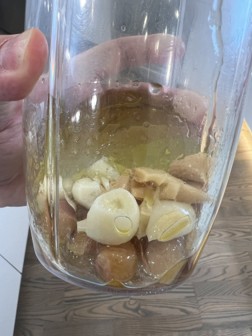
- Infuse and cook the pasta. Salt the water generously, including the reserved garlic water, and stir in about one third of the garlic emulsion before adding the pasta. Cook until just shy of al dente, then reserve about 1 1/2 cups pasta water.
- Whisk the Parmesan slurry. Whisk together warm pasta water, the Parmesan, and the white pepper until creamy. This pre-whisked slurry helps the cheese melt evenly without clumping.
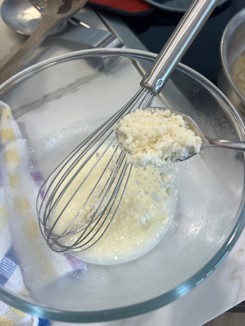
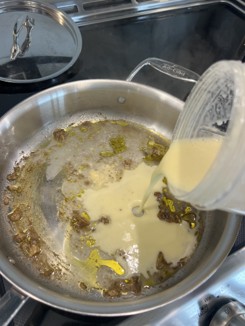
- Combine. Warm the remaining garlic emulsion over medium-low heat, add the pasta, and pour in the Parmesan slurry. Toss vigorously, adding pasta water a few tablespoons at a time, until the sauce is silky and glossy.
- Serve. Serve immediately with extra Parmesan, fresh white pepper, and a drizzle of excellent olive oil.
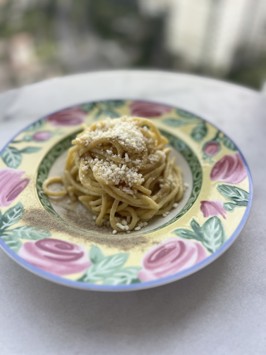
Chef’s Notes
I first made this Garlic Parmesan Pasta for my son Avi, when he surprised us by coming home for dinner at the last minute. I had just made cacio e pepe, but Avi does not like it so spicy, so I improvised, and this gentler, garlicky dish is what came of that night.
Boiling the garlic transforms it completely. Instead of sharpness, it turns naturally sweet and creamy. Blended into olive oil, it becomes a velvety emulsion that coats every strand of pasta. The method builds three layers of garlic flavor: blended into the sauce, infused into the pasta water, and warmed again in the pan. It is delicate rather than assertive, which lets the Parmesan remain the star.
Garlic Pasta: Garlic Four Ways
The garlic-infused pasta follows the same philosophy, but each layer reveals a different personality of garlic.
- Thinly sliced garlic in olive oil. Slow cooking removes the harsh bite and creates a sweet, aromatic garlic oil.
- Boiled garlic emulsified with olive oil. Whole cloves are boiled until silky soft, then blended with extra-virgin olive oil and pasta water into a smooth garlic cream. That emulsion is used twice, stirred into the pasta water so every strand absorbs a subtle garlic flavor as it cooks, and added again in the skillet as the sauce comes together for richness and body.
- Roasted garlic in olive oil. Roasted cloves add a deep, caramelized sweetness that contrasts beautifully with the brighter garlic notes.
- Crispy garlic garnish. Very thin slices are fried slowly until golden, then scattered over the finished pasta for crunch and aroma. Optional, but highly recommended.
When I serve these dishes together, I do not ask guests to choose a favorite. I invite them to taste the conversation.
Like Moses and Aaron, each speaks with a different voice, yet both point toward the same truth: extraordinary meals do not require extraordinary ingredients. They ask for patience, humility, and the willingness to let simple things become something beautiful together. That may be the finest lesson both the Bible and the Italian table have to teach.
Further Reading:
A few places to explore the biblical and rabbinic ideas woven through these two dishes.
- Moses and Aaron, two voices for one mission. Exodus (Shemot) 4:10 to 16, where Moses calls himself “slow of speech” and God appoints his brother Aaron to be his mouth. See also Shemot 7:1, where Aaron is named Moses’s spokesman.
- The Mishkan, built from ordinary gifts. Exodus (Shemot) 25:1 to 9, where the Sanctuary is made from the freewill offerings of everyone whose heart moves him, so that God may dwell among the people (25:8).
- The taste of the manna. The rabbis of the Talmud (Yoma 75a to 75b) taught that the manna could taste like whatever the eater wished. The Torah itself describes it more plainly, “like wafers made with honey” (Shemot 16:31) and “like the taste of cakes baked with oil” (Bamidbar / Numbers 11:8).
- Cucina povera, the cooking of the poor. The Roman peasant tradition behind both dishes, where cheese, pepper, garlic, and oil become a feast.
Each dish also stands on its own, and the same idea turns up all over this kitchen.
- Classic Cacio e Pepe. The recipe on its own page, easy to print and carry to the stove.
- Garlic-Infused Parmesan Pasta. The gentler cousin on its own page, with the Garlic Four Ways notes.
- Eggplant Parmigiana (Melanzane alla Parmigiana). Layered, patient, and made for a harvest table.
- Eggplant Meatballs (Polpette di Melanzane). A vegetarian dish that carries a Sukkot meal without asking for meat.
- Passover Chicken Matzo Balls (Kneidlach). Two ingredients, nothing discarded, and a new recipe born from what was almost left behind.
- Breaking Matzo essays and reflections. Where the ideas behind the recipes are worked out at greater length.
May your table be full, your ingredients simple, and your gatherings blessed with the abundance that comes from sharing something made with care.