Peaches answers cream.
Two daughters present and counted.
The walk can begin.
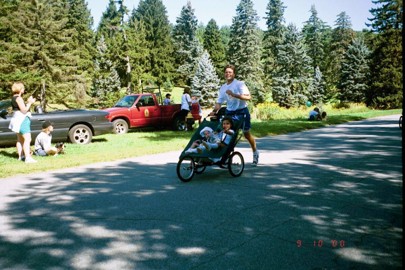
“Who wants to be Peaches? Who wants to be Cream?” For years, that was how our family adventures began. Whether we were going for a run in the baby jogger, heading on a hike, walking to the park, or getting into the car; I always would ask the question. Caroline would quickly claim one. Lucy would take the other. Sometimes they switched. Sometimes they argued. But eventually the answer always came. “I’m Peaches. I’m Cream.”
Everyone was present. Everyone was accounted for. We were ready to go.
For years, I simply thought it was a fun family ritual. Only later did I realize that something deeper was hiding within the peaches and cream. It was our family census. Not because I needed the number, but to make sure nobody was left behind.
Every parent understands this. You count the children before a hike. You count them before getting on a bus. You count them before leaving the restaurant. The counting is not about arithmetic, it’s about responsibility.
Years ago, British Prime Minister David Cameron discovered that lesson for himself. After a family lunch, he and his wife drove home separately and realized that their eight-year-old daughter was in neither car. They had left her behind at the pub. They returned quickly and found her safe.
Every parent knows the wave of panic that must have washed over them in that moment. The problem was not transportation, it was assumption. Nobody counted.
Perhaps that has contributed to why I have always been curious about the Torah’s obsession with counting.
* * *
We recently read the Torah portion Bamidbar, which opens with a census. Moses and Aaron are instructed to count the Children of Israel tribe by tribe. At first glance the census feels administrative. Tribal totals, military readiness, ancient record keeping. But the Torah rarely spends this much ink on something that is merely administrative. If God simply wanted a number, He did not need Moses. God already knew the number. The census must be about something else.
I believe the clue to the census’s true purpose is hidden in the fact that Bamidbar is not the Torah’s first count. Long before Moses counted Israelites in the wilderness, Noah was counting animals on the ark. The Torah could have instructed Noah to bring one lion, one elephant, one giraffe, one dove. Instead, the animals enter the ark shnayim shnayim, two by two. The first admission ticket in the Torah is not a coin, it is a relationship. Noah did not preserve species through inventory. He preserved creation through partnership; no animal entered the ark alone. The future of the world depended not merely upon survival, but upon belonging.
Noah and Moses both delivered a newly formed community across a body of water to a new beginning. The first census in the Torah is not a count of animals. It is a count of relationships.
The same pattern returns centuries later, in Exodus. God commands Moses to count the Israelites through a half shekel offering. Every person contributes the same coin. Rich and poor. Leader and laborer. Yet each person gives a half shekel rather than a whole one. Why half? The lesson was embedded in the coin itself. None of us can be complete alone.
You count because you belong. You only become whole when you find your other half.
* * *
My counting has changed. Once I counted daughters before hiking. Then, one winter night a few years ago, I took my first new census.
On the first Hanukkah that Joan and I shared together, I told her that the menorah on our table had once belonged to Marilyn Monroe. Monroe had converted to Judaism before her marriage to Arthur Miller in 1956. Joan stopped, looked at me and then back to the menorah. She was surprised and filled with wonder because of her lifelong admiration for Marilyn Monroe. She lit the candles with a double portion of joy.
Each Hanukkah since, when the candles burn, Joan glances at the menorah with the same joyous smile she had on that first night. The most photographed American woman of the twentieth century once lit Hanukkah candles in her own home. Her menorah now lives in ours. It was, in a way, our first half shekel; the small coin that turned a house into a household. Two halves becoming one whole.
* * *
This is what the Torah has been quietly teaching us, from the ark to the half shekel, and from Marilyn’s menorah to the trailhead at the start of a family hike. The Torah does not merely count individuals. It counts them into belonging. The count does not only recognize the bond. The count brings the bond into being.
We count the Omer. We count toward a minyan. We count generations. We count through the half shekel. We count tribes in the wilderness. No matter what we count, the purpose is never arithmetic. The purpose is belonging, and the counting itself is what brings the belonging into being.
* * *
Today is Father’s Day. Tomorrow, Caroline turns thirty. I approach sixty. My father, the girls’ beloved Gramps, turned ninety-one. Three generations stand together at nearly the same moment in time. Thirty. Sixty. Ninety. A small census of our own, not of population but of blessing.
I am closer now to becoming a grandfather, b’H, than to running another baby jogger race. Those days have passed. New ones are approaching.
I do not yet know how I will count my grandchildren. I do not yet know what call and response will follow peaches and cream. Maybe milk and honey, the promise of the Promised Land. Maybe light and light, one candle, then another, then another. Maybe something my grandchildren invent before I have the chance to name it. If two by two was Caroline and Lucy, then I pray that the next ark may carry more.
I pray for many. I pray for a tribe, full of faith, and of belonging. Because the Torah counts us for the same reason that parents count their children before a hike. Not because we need the number, but because we do not want to leave anyone behind.
* * *
The census was never counting Israelites.
The census was creating Israelites.
The count created belonging.
* * *
Two halves at the door.
Peaches answers cream. We count.
No one left behind.
* * *
Then and Now
The Peaches and Cream Tradition Continues

The Peaches and Cream call and response began when Caroline and Lucy were small. It continues to this day. Twenty five years on, the same two daughters still answer the same two questions.
* * *
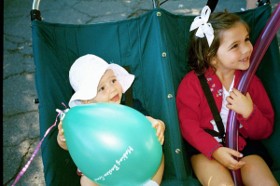
Then. Caroline and Lucy. The baby jogger days.
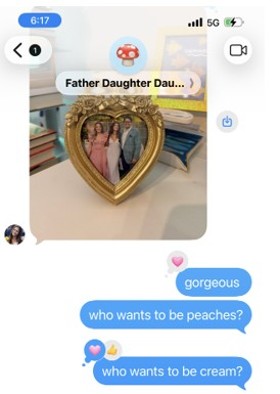
Now. The same question, twenty five years later.
* * *
If you would like to read more about Marilyn Monroe’s menorah and its journey into our home, I shared that story previously here: The Magical, Meaningful, and Memorable Story of Marilyn Monroe’s Menorah.