Moroccan lamb had lived in my imagination long before it ever reached my plate. From far away, I pictured it as a mysterious alchemy of spices and slow time. A melding of flavors and textures that somehow tasted like history itself.
Moroccan cuisine feels like a tapestry woven by many hands. Berber, Jewish, and Arab traditions, layered and intertwined, all bringing their own melodies. Walking through the markets of Marrakech, I saw pyramids of spices. Golden turmeric, brick-red paprika, and cinnamon sticks like little scrolls of Torah. Each one carried stories of trade routes, holidays, and family tables.
I was especially drawn to lamb. Moroccan lamb is somehow both bold and gentle. The flavor comes from the mingling of spices like ras-el-hanout, ginger, saffron, and cinnamon. The tenderness comes from hours of slow cooking and braising. What surprised me most is what isn’t in the dish. There is no cream, no flour, and no added fat. The rich, glossy sauce is created simply from water, onions, spices, and the lamb itself. As the pot simmers, the liquid slowly reduces, and what’s left is the pure essence of concentrated flavor, like a prayer that has been whispered again and again until only the heart of the words remains.
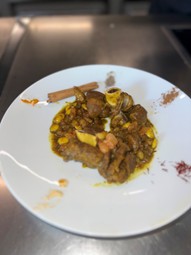
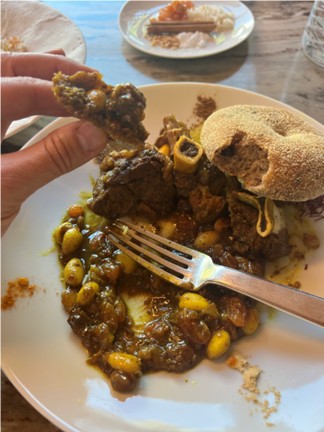
At the Royal Mansour in Marrakech, I had the privilege of learning M’rouzia of Moroccan Lamb, a dish that sits at the crossroads of sweet and savory. With honey and raisins, it carries the sweetness of hope. With lamb and warm spices, it carries the depth of memory. I couldn’t help thinking of our tables at Rosh Hashanah, Sukkot, and Shabbat evenings. Moments when we also try to hold sweetness and seriousness together on a single plate.
This M’rouzia is a “make-ahead” kind of dish. It gets better as it rests, just like a good story. You can cook it slowly before Shabbat or a holiday meal, then rewarm before serving. The lamb becomes softer, the sauce even deeper and more harmonious. It’s the kind of food that invites patience: you can’t rush it and that’s precisely the point.
In a world that often celebrates speed, Moroccan lamb teaches a different kind of wisdom. Flavor comes from faith in the process. You add water and wait. You trust that what looks thin now will grow rich in time. Maybe that’s a spiritual lesson as well: sometimes our lives feel watery and unfinished, but with care, warmth, and patience, they can become thick with meaning.
Here is the recipe as I learned it adapted for our Breaking Matzo table. I hope it brings warmth, sweetness, and a taste of Moroccan-Jewish connection to your home.
M’rouzia of Lamb (Moroccan Royal Mansour Style)
Serves: 5 people
Source: Royal Mansour, Marrakech – Moroccan Course 2
Ingredients
- 1.5 kg (about 3¼ lbs) lamb shoulder, cut into pieces with the bone
- 5 g ras-el-hanout
- 2 g black pepper powder
- 2 g ginger powder
- 1 g saffron pistils (threads), lightly crushed
- 3 g cinnamon powder
- 10 g cinnamon stick (about 1 large stick)
- 20 g fresh ginger, peeled and sliced
- 200 g sultanas (golden raisins), rinsed and drained
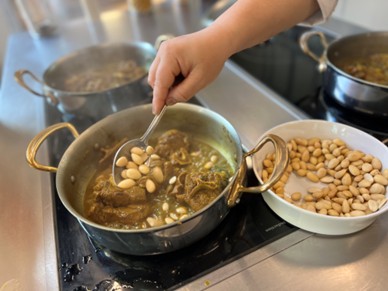
- 250 g blanched almonds
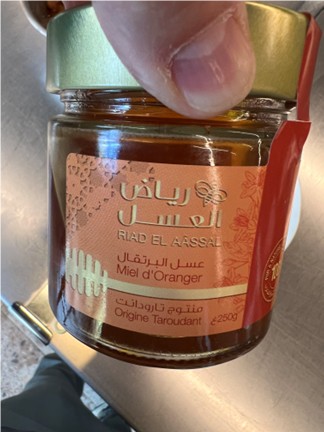
- 80 g honey with orange blossom (or regular honey)
- Olive oil
- 20 g salt (about 1½ Tbsp), or to taste
- Water, as needed
Method
- In a small bowl, combine the ras-el-hanout, black pepper, ginger powder, saffron, and cinnamon powder. This is your fragrant spice mix.
- Place the lamb shoulder pieces in a large bowl. Add half of the spice mixture and salt. Massage the spices into the meat until each piece is well coated. Cover and marinate in the refrigerator, ideally overnight, or at least a few hours.
- Transfer the marinated lamb and any juices to a heavy pot or Dutch oven. Set over medium heat and cook for a few minutes, turning occasionally, until the meat is lightly browned and beginning to release its aromas.
- Add the cinnamon stick and fresh ginger slices to the pot. Pour in enough water to just cover the meat. Bring to a gentle simmer, then reduce the heat to very low. Cover and cook slowly until the lamb is tender and nearly falling off the bone, 1½–2 hours, checking occasionally and adding a little water if needed so nothing burns.
- While the lamb is cooking, rinse the sultanas and drain them well. Set aside the raisins and blanched almonds.
- When the lamb is almost fully cooked and tender, add the sultanas, almonds, honey, butter, and the remaining spice mixture. Stir gently to combine. Continue to cook over low heat, uncovered, for about 30 minutes. The liquid should slowly reduce into a thick, glossy sauce that lovingly coats the lamb, raisins, and almonds. Stir occasionally to prevent sticking.
- Taste and adjust the seasoning with additional salt if needed. Remove the cinnamon stick and ginger slices if you like.
- Serve hot, spooning the lamb, raisins, and almonds onto a platter and drizzling every drop of the rich sauce over the top.
M’rouzia is wonderful alongside couscous, rice, or simple crusty bread to soak up the sauce. I love pairing it with a bright salad oforanges and fennel or cucumbers and herbs to echo the balance of flavors in the dish itself.
May this Moroccan lamb bring sweetness to your year, warmth to your Shabbat, and a little taste of Marrakech to your kitchen.
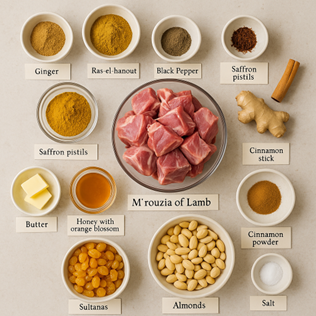
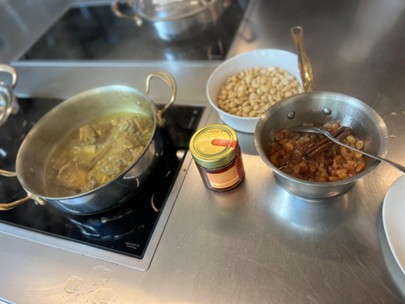
Here is a mis en place for M’rouzia of lamb:
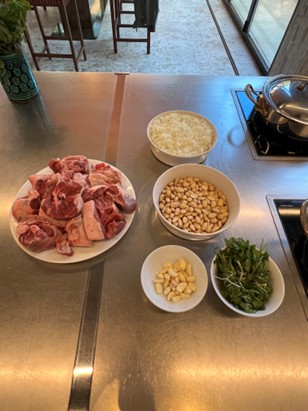
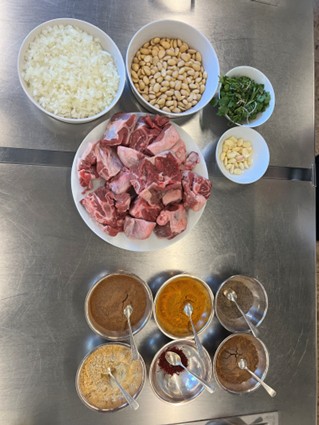
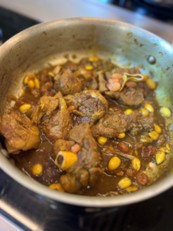
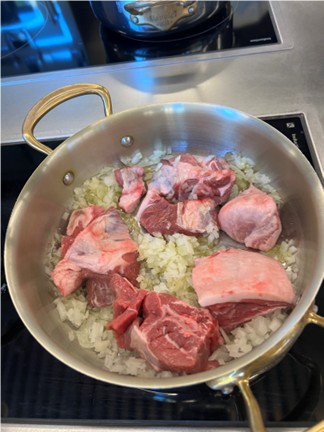
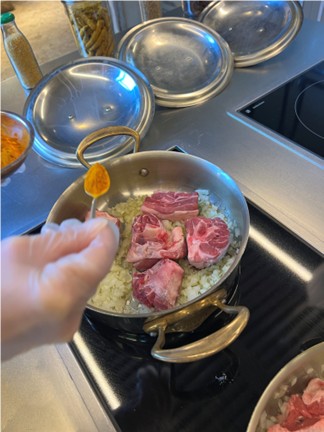
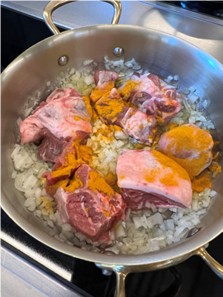
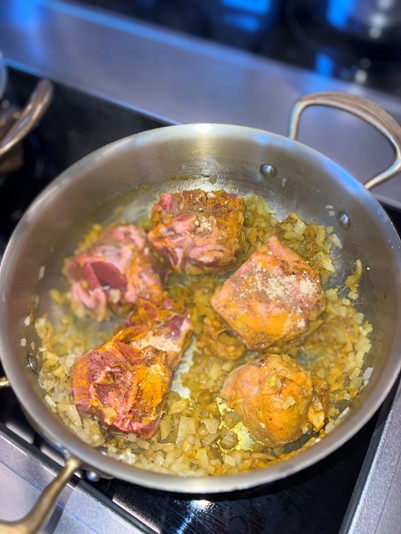
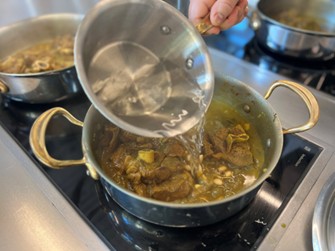
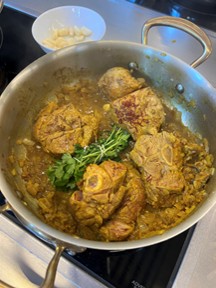
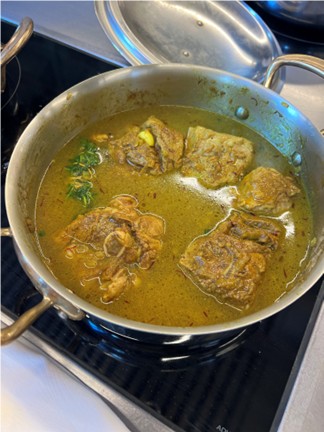
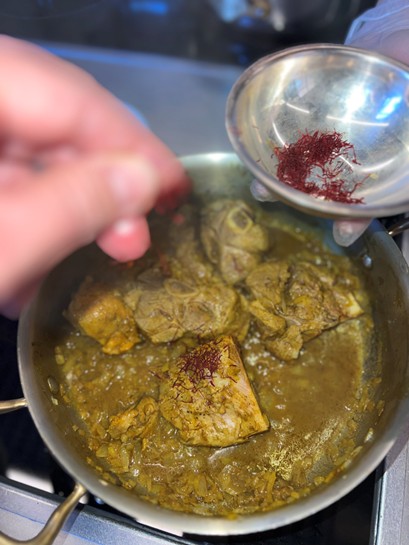
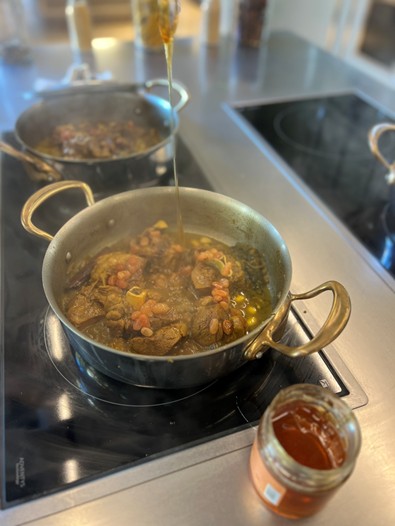
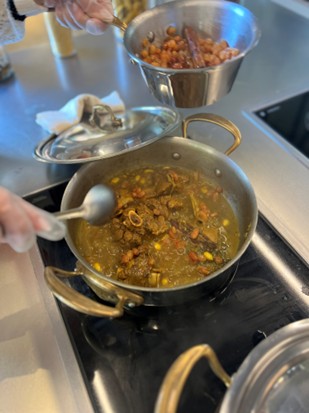
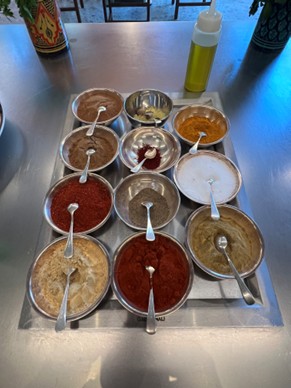 These photos capture the heart of Moroccan lamb: time, patience, and constant gentle attention. First, the onions are slowly sweated in the pot until soft and fragrant, creating the sweet base of the sauce. The lamb pieces are then nestled into the onions and seared over medium-high heat.
As the meat cooks for over three hours, each spice and ingredient is added in stages. With every addition, you actively stir the onions and sauce and gently move the lamb, flipping each piece so it browns evenly. The key is to handle the meat carefully, turning it without breaking it apart or pulling it off the bone.
At every step, you add just a little water, enough to loosen the bottom of the pan and create a thin sauce. You stir and simmer until the liquid reduces and the flavors deepen, then add the next ingredient and another splash of water. Little by little, through this rhythm of adding, stirring, reducing, and repeating, the sauce becomes thick, glossy, and intensely flavored, and the lamb turns meltingly tender while still holding to the bone.
Would the following language be acceptable for the link for each individual recipe “You read more about Morocco’s inspiring cuisine and find additional recipes here.