You can find a Hebrew version of this blog here.
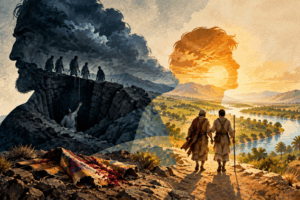
Light does not argue with darkness. It does not negotiate with it. It simply shines thru it.
On Sunday December 14, 2025, as news of the Sydney Hanukkah massacre spread, my phone buzzed and my inbox filled. One message stopped me and lifted my soul. It was from my friend Tim. He was writing as a son-in-law, as a witness, as someone who had lived inside a story that suddenly felt topical again.
He wrote about his wife Liz’s father: Keith Torney.
Keith Torney was a pastor in Billings, Montana., During Hanukkah in 1993, when hate decided to test a small American town, Keith Torney stood up. Not as a Jew, not as a politician, not seeking recognition, but as a human being who understood something fundamental: when one of us is attacked, we are all under attack, and we must lead with love in the face of hate.
I had heard the Billings story before, as many of us have. It has become almost folklore now. The story is taught to children through the beautiful book The Christmas Menorahs: How a Town Fought Hate. Rereading it in this moment, with fresh wounds still open, the story lands differently. It no longer feels like history. It feels like an instruction manual and a reminder of who we are capable of being.
In 1993, Billings was targeted by white supremacists seeking to carve out an “Aryan homeland.” They desecrated the Jewish cemetery. They threatened the synagogue with bombs. A brick was thrown through the bedroom window of a five-year-old Jewish boy, Isaac Schnitzer. It was aimed directly at the menorah on the windowsill.
The police advised Isaac’s mother, Tammie, to take the menorah down. This moment, quiet, procedural, and well-intentioned was the crossroads. History often turns not on grand speeches, but on small unbearable choices. Hide or shine. Remove the light or risk more darkness.
Tammie Schnitzer did something brave. She spoke publicly. She asked a question that still echoes: how do you explain to a child that in America, Jews must hide their menorahs; especially during a holiday that celebrates the freedom to worship openly?
Margaret MacDonald, a Christian woman in Billings, heard that question and refused to let it go unanswered. She called her pastor, Keith Torney, and asked if the children in Sunday school could draw menorahs and place them in their windows.
Keith Torney did not hesitate. He encouraged other churches to do the same. What followed still feels miraculous in its simplicity.
Hundreds of hand-drawn menorahs appeared in windows across Billings. Then thousands. The local newspaper printed a full-page black-and-white menorah for residents to cut out and tape to their windows. Businesses joined in. Homes with Christmas trees displayed menorahs beside them. The message was unmistakable: if you target any Jews , you will have to target all of us.
The hate groups tried to push back. Shots were fired into a Catholic school. Church windows were smashed. But hate relies on isolation, fear, and silence. Billings offered none of the above. The volume of light overwhelmed the darkness. The extremists retreated and left town.
This is why Keith Torney and the people of Billings were modern-day Maccabees. Every revolt needs a leader and in Billings, Keith Torney was Judah the Maccabee: not wielding a sword, but calling others to stand, to act, and to refuse silence.
The original Maccabees were Jews who fought a mighty empire for the right to live as Jews. The miracle of Billings is that non-Jews picked up that mantle, not with weapons, but with paper, crayons, and windows. It was David versus Goliath, fought not with stones, but with children’s drawings and moral clarity. They understood, instinctively, that the Jewish struggle to worship freely is not a parochial concern. It is the foundation of any society that claims to value liberty.
At Yad Vashem, we honor righteous gentiles who saved Jews during the Holocaust. Their names are etched into history because they chose courage when the cost was real and the outcome uncertain. Keith Torney belongs in that lineage. Not because he saved Jews from death camps, but because he understood the same eternal truth: when Jews are targeted for being Jews, neutrality is not an option.
Hanukkah teaches that lesson again and again. After the destruction of the Temple, the rabbis debated whether Hanukkah should still be celebrated. The physical center was gone. The political victory long past. And yet they said yes, because Hanukkah is not about power. It is about persistence. About lighting a small flame in defiance of history’s repeated attempts to extinguish it.
The menorah itself carries that meaning. It is the oldest symbol of the Jewish people, representing creation, order, and divine presence. On Hanukkah, the hanukkiah brings that holiness into the home.
That flame has survived the Inquisition, pogroms, the Holocaust, October 7th, and now a global resurgence of antisemitism that feels frighteningly unrestrained. Synagogues are attacked. Jewish professors are targeted. Jewish students are harassed. The Bondi Beach Hanukkah Massacre 2025. And once again, Jews are being told; sometimes explicitly, sometimes gently, to be quieter, less visible, and less Jewish.
The answer is the same now as it was in Billings in 1993. Do not dim the light. Multiply it.
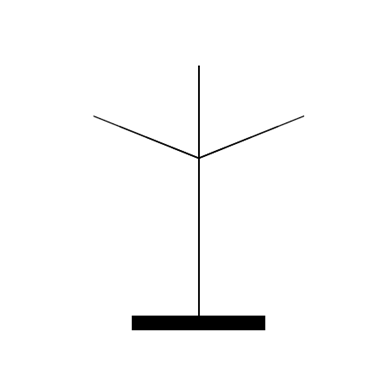
To my non-Jewish friends asking what they can do: During this holiday season—Hanukkah or Christmas—place a menorah in your window. It can be drawn by a child. It can be printed on paper. It can be as simple as the paper menorah below .
When you place a menorah in your window, you are not performing a ritual. You are making a statement: that Jews do not stand alone, that faith deserves protection, and that light grows stronger when it is shared.
Keith Torney understood this more than thirty years ago. A town understood it with him. And because of that choice, paper and ink became courage, windows became sanctuaries, and a small Montana winter became part of the eternal Hanukkah story.
Light does not argue with darkness.
It shines thru it.
Sometimes in oil.
Sometimes in crayons.
Sometimes because someone decides to lead and others decide to follow.
How to use this illustration:
- Print this illustration.
- Cut out the menorah or display it as is.
- Place it in a window during Hanukkah or the holiday season.
- Share the light with your neighbors and your community.
This menorah is a faithful modern recreation inspired by the newspaper printed menorah used in Billings, Montana in 1993
You can read more about the light of Hanukkah shining through the darkness here.
You can read this blog in Hebrew here.