Melted doubts drift off.
Fractures bloom in hidden hearts—
Rainbows born from pain.
Water is the only natural element that exists commonly in all three physical states: solid, liquid, and gas. Temperature catalyzes its transformation. The introduction or removal of energy reorganizes its internal structure and changes the ratio of air embedded within it. This installation uses these characteristics as a medium for exploring perception, time, and transformation. By juxtaposing water, ice, and glass the piece reveals how slight internal differences create profound visual and symbolic divergence.
Abstract of the Installation
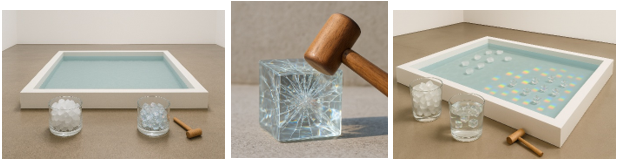
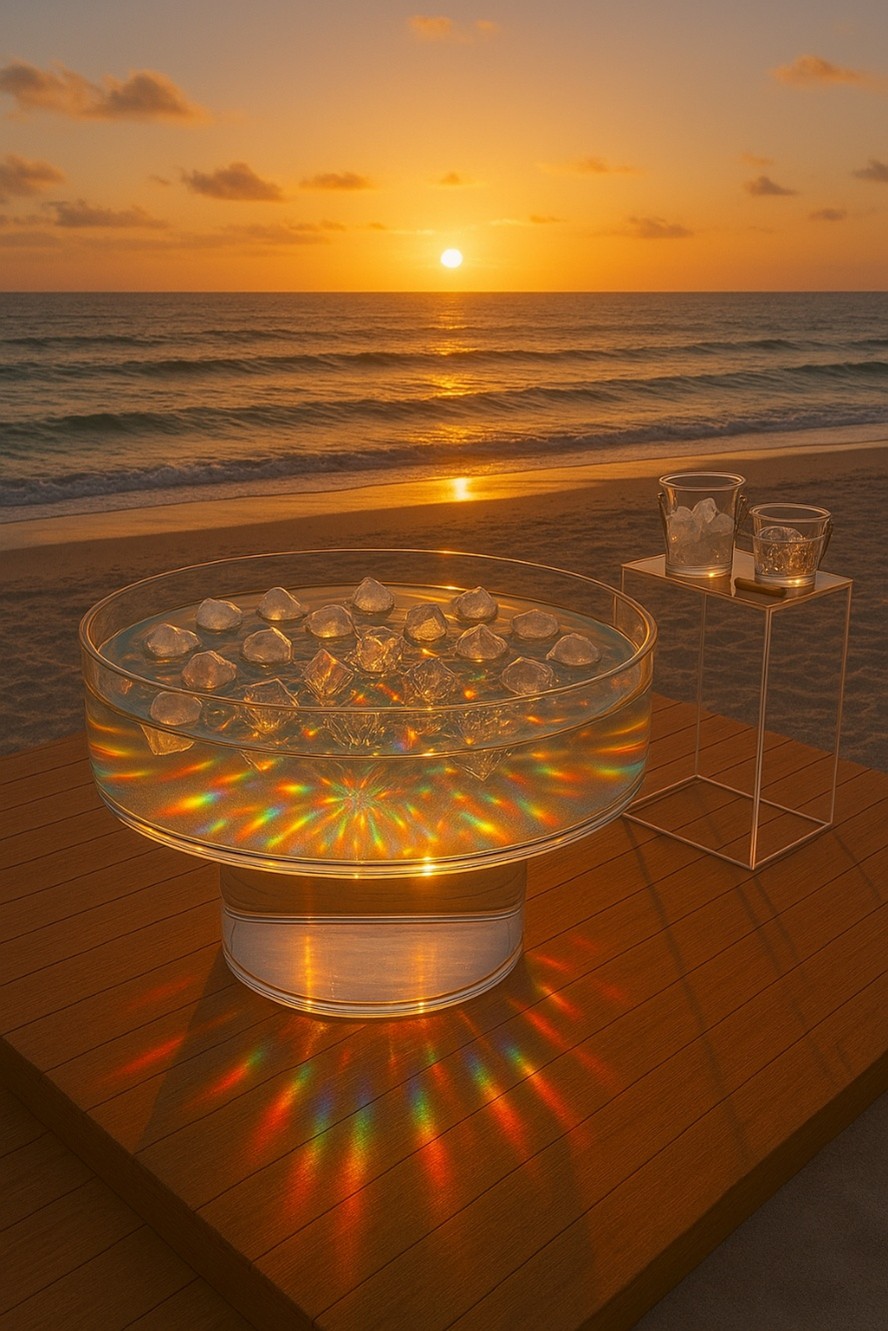
From a distance, the viewer encounters a serene pool of water accompanied by two simple containers holding seemingly identical cubes. Through closer inspection it is revealed that one bucket contains ice cubes and the other contains glass cubes of the exact same size.
The installation is intentionally participatory, transforming each visitor from observer to co-creator. Every participant completes a two-step ritual:
- Take an Ice Cube
The visitor lifts an ice cube and tosses it gently into the pool. Because the crystalline structure of ice expands and traps air, it floats effortlessly on the surface. - Take a Glass Cube
The visitor then selects a glass cube. Using a wooden mallet placed nearby, they tap the cube to create a subtle internal fracture. A shattering occurs inside the cube while its external form remains intact. The fractured glass cube is then tossed into the pool, where it sinks slowly below the surface.
Temporal Evolution
The installation unfolds over hours and days, using time as a central medium.
Immediate Observation (First Few Minutes)
The contrast is clear:
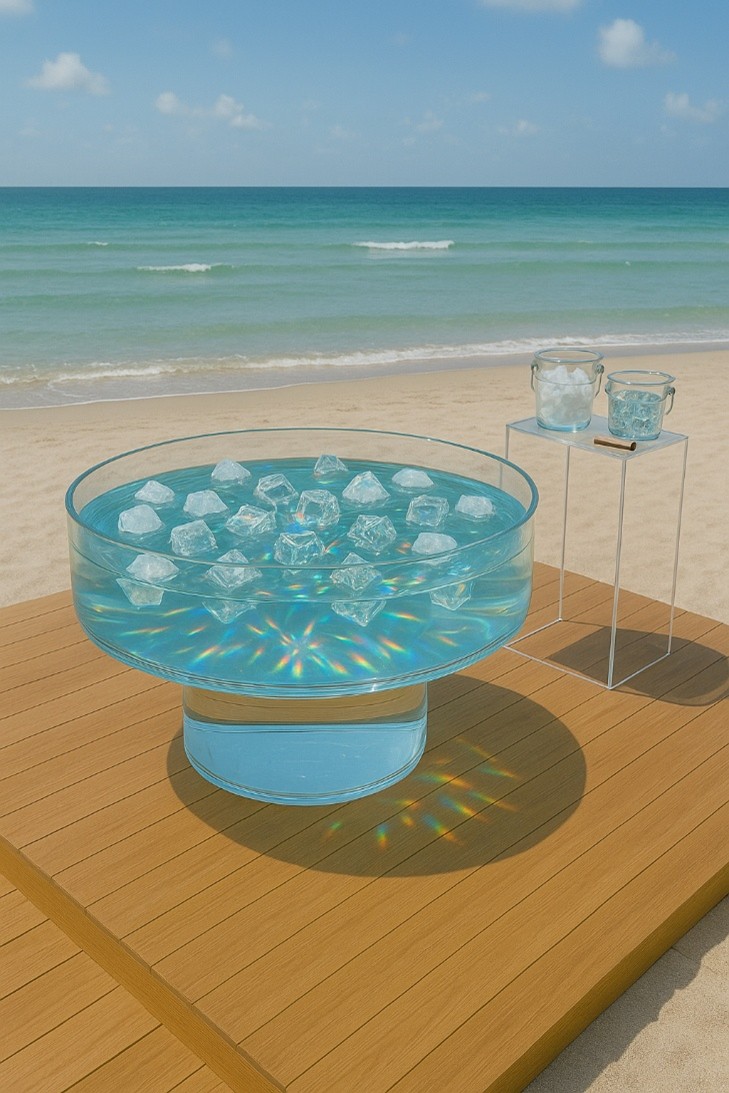
• The ice cubes float, their lower density making them buoyant.
• The fractured glass cubes sink, their high density pulling them below the surface.
Quiet dichotomies appears: lightness versus heaviness, fragility versus solidity, transparency versus opacity.
Short-Term Transformation (Hours)
As the ice melts, its solid form dissolves into the larger body of water. The literal disappears, leaving only the memory of the participant’s action.
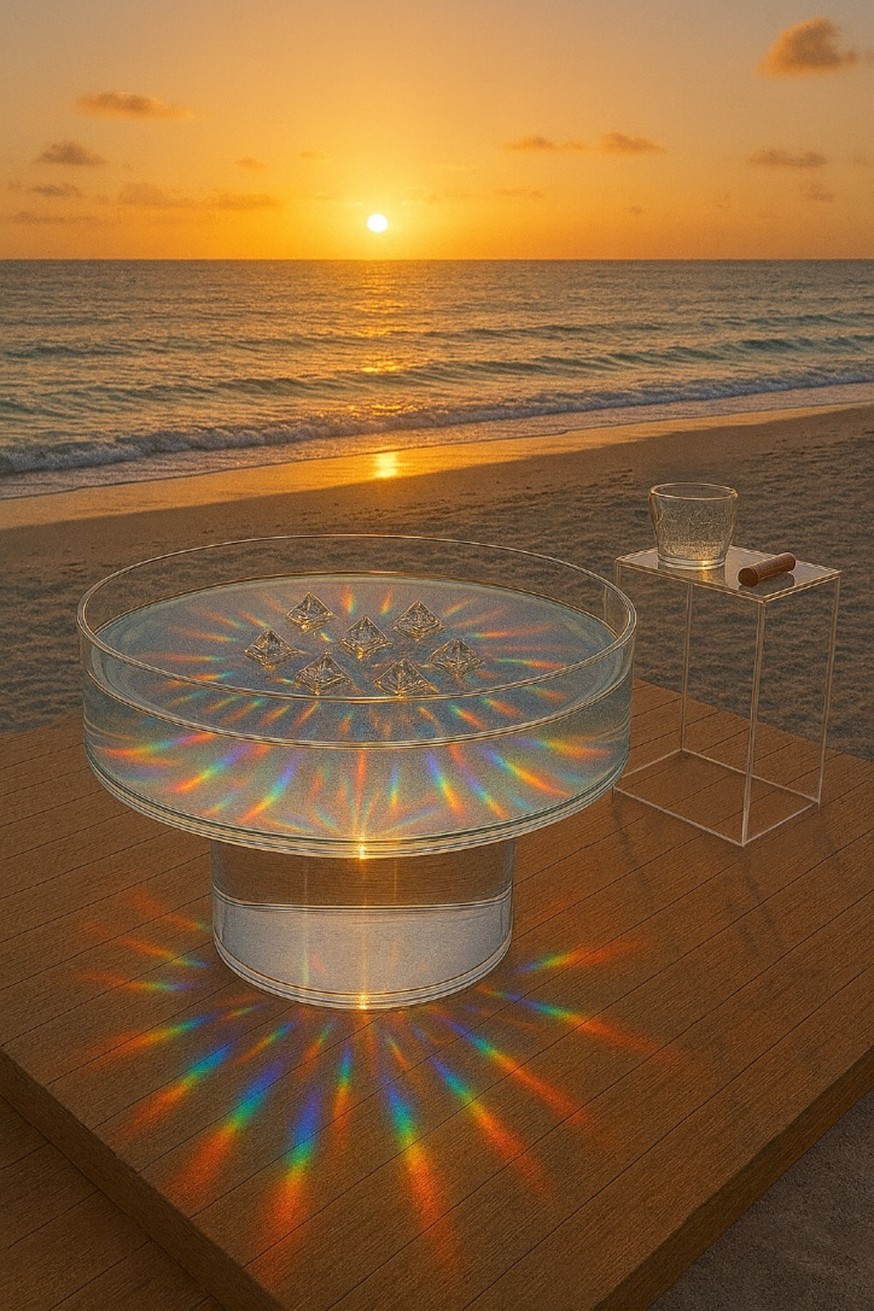
Meanwhile, the fractured glass cubes begin to interact with sunlight. Internal cracks refract the light, creating small rainbows that shimmer below the water’s surface.
Material transformation becomes visual transformation.
Long-Term Display (Days)
After several days, the pool becomes a constellation of refracted color. As sunlight moves across the installation, the fractured cubes generate shifting prisms of light. Dynamic rainbows dancing across the water and surrounding environment.
The installation, once minimal and serene, becomes radiant and full of motion.
Artistic Intention
The piece leverages physical science to express a deeper meditation on:
- States of being: Solid, liquid, and fractured forms coexist, reflecting human emotional and spiritual states.
- Impermanence: Ice melts; only its effects remain.
- The beauty within fracture: Cracks in glass become conduits for color, revealing the hidden aesthetics of internal disruption.
- Perspective: From afar, everything appears identical. Closer participation uncovers the truth of variation and vulnerability.
- Time: The artwork evolves without intervention, emphasizing patience, observation, and natural transformation.
Visitor Experience
The installation invites participants to:
- Engage physically, not just visually.
- Contribute to the evolving sculpture.
- Witness how identical external forms diverge profoundly through internal structure.
- Reflect on how subtle internal differences like air content, density, fracture patterns can lead to dramatically different outcomes.
The viewer becomes a collaborator in a quiet choreography between nature, physics, and light.
Biblical Symbolism and Interpretive Framework
Rainbows After the Flood: Promise After Suffering
In Genesis, following the Flood, God places a rainbow in the sky as a covenantal sign that destruction will never again be visited upon the world in such a total way. The rainbow emerges only after the storm symbolizing mercy, renewal, and divine presence following suffering. The installation echoes this moment: the refracted rainbows emerging from fractured glass within the water recall God’s promise that brokenness can give rise to beauty, covenant, and hope.
Breaking the Glass: Memory, Covenant, Fragility
The act of striking the glass cube with a mallet invokes the breaking of the glass at a Jewish wedding. That ritual simultaneously remembers the destruction of the Temple and affirms the irrevocable bond between bride and groom. Here, breaking the glass transforms it into a prism. An object whose internal fractures allow light to radiate outward. Pain is not denied; it becomes the source of illumination. A shattered inner structure becomes an engine of beauty.
Seeing From Afar vs. Seeing Up Close: A Commentary on Jewish Peoplehood
From a distance, the ice cubes and glass cubes seem the same much as the tribes of Israel, or the Jewish people in any era, may appear unified. Yet upon approaching, the differences become evident. This resonates deeply with biblical narratives where surface unity masks diverging inner commitments.
The Twelve Spies (Numbers 13–14): Faith vs. Fear
All twelve spies were children of Israel, tasked with viewing the Promised Land.
Yet ten returned with fear, despair, and rejection of God’s promise. They sought to stone Caleb and Joshua, who alone upheld faith and mission. The ice cubes represent those whose spiritual core is “full of air,” lacking substance and resolve. They float for a moment but inevitably melt into the undifferentiated water lacking the internal structure to endure.
Joseph and His Brothers (Genesis 37): Envy vs. Vision
Similarly, ten of Joseph’s brothers were consumed by jealousy and sought to destroy him. Superficially, they were all sons of Jacob, but their spiritual resilience diverged dramatically. Like the ice cubes, envy dissolves, leaving no enduring form.
Ice and Fractured Glass: Two Inner Responses
This installation does not seek to define or divide people, but rather to explore different inner responses to pressure, faith, and time—responses that can exist within individuals, communities, and even within a single life.
Ice
Ice is light because it contains air. It floats easily, but it cannot endure warmth for long. In the installation, ice represents moments when commitment is thin, when faith feels distant, or when connection to Torah, God, or Israel becomes fragile under heat or strain. Ice is not condemned; it is temporary. It appears solid, yet it inevitably dissolves back into the larger body of water, leaving no distinct form behind.
Fractured Glass
Glass, by contrast, is dense and enduring. When struck, it does not disappear—it fractures internally. Those fractures become pathways for light. In the installation, fractured glass reflects moments of struggle, doubt, or suffering that do not erase faith but deepen it. Even when broken, glass retains its structure and transforms light into color. What appears damaged becomes radiant.
Brokenness as Brilliance
Within this visual language:
- Ice suggests impermanence—ease without depth.
- Glass suggests endurance—strength that survives fracture.
- Melting becomes a metaphor for dissolution.
- Fracturing becomes a metaphor for transformation.
- Rainbows emerge as symbols of covenant, hope, and divine presence revealed through struggle.
The work is not about who belongs and who does not. It is about what endures, what transforms, and what refracts light when tested.
For a more personal and narrative reflection on the ideas within this work, the companion essay, Remember the Rainbow That Remains, invites the reader into the lived and imagined experience behind the installation.